
Craft Supplies & Tools ● 20 Nov 2026
Origami Paper vs Cardstock: Which Paper Is Best for Your Projects?
Choosing the right paper can make a big difference in the quality of your paper crafts. Whether you enjoy folding beautiful origami animals, creating handmade decorations, making greeting cards, or building 3D paper models, the type of paper you use affects the final result.

Two popular choices among paper craft enthusiasts are origami paper and cardstock. Although both are used for creative projects, they have different thicknesses, textures, strengths, and purposes.
Origami paper is generally lightweight and designed for easy folding, while cardstock is thicker, stronger, and better suited to projects that require structure and durability.
But which one should you choose? Is cardstock suitable for origami? Can you use origami paper for handmade cards or decorations?
In this guide, we will compare origami paper vs cardstock, explain their differences, explore their advantages and disadvantages, and help you choose the best paper for your next creative project.
1. What Is Origami Paper?
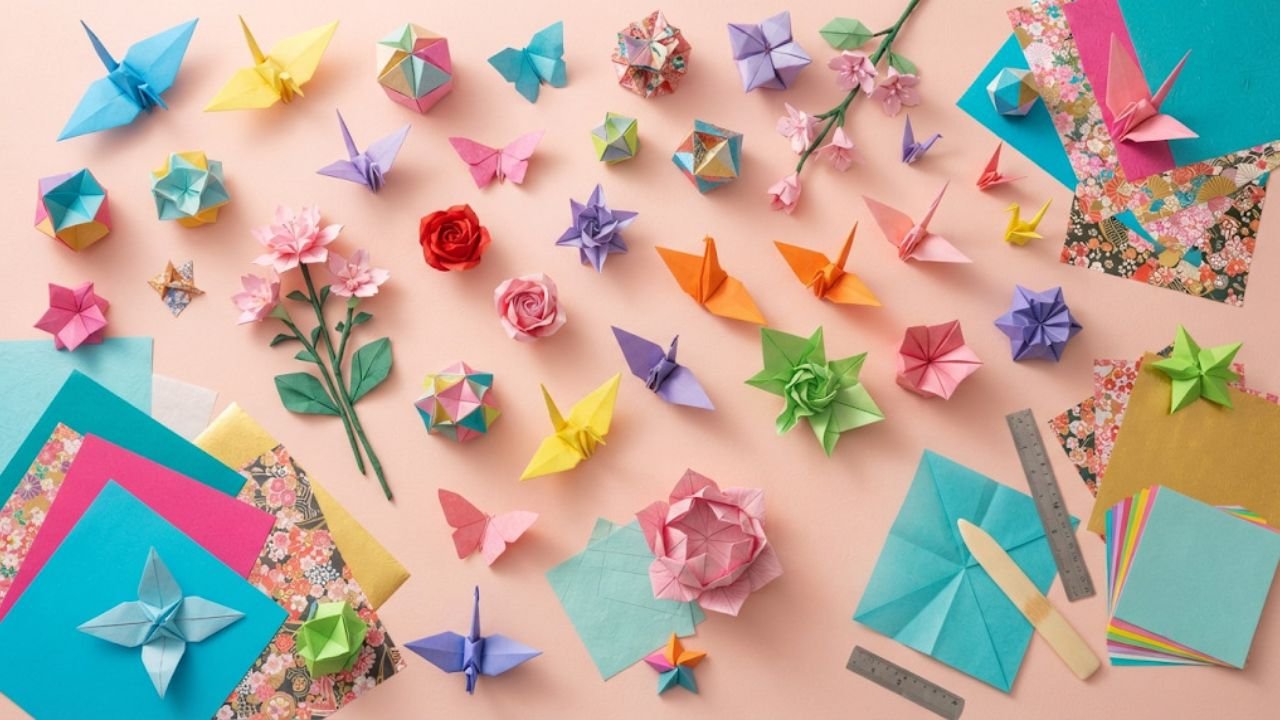
Origami paper is specially designed for folding paper into different shapes, figures, and decorative models. It is commonly available in square sheets and comes in a wide variety of colours, patterns, and finishes.
Traditional origami paper, often called Kami, usually has one coloured side and one white side. However, modern origami papers are also available in double-sided colours, metallic finishes, and decorative patterns.
The lightweight construction makes origami paper easier to fold, crease, and manipulate into detailed shapes.

1500 Sheets Vibrant Double-Sided Origami Paper Set
Explore colorful paper folding with 20 vibrant shades.
Bring creative ideas to life with this bulk origami paper set featuring 1,500 square sheets in 20 vibrant colors. Each 6 × 6-inch sheet is made from 70 GSM paper with the same color on both sides for a consistent finish. Ideal for kids, beginners, families, teachers, and craft enthusiasts for origami models, school projects, DIY crafts, and festive decorations.
Common characteristics of origami paper
- Lightweight and flexible.
- Usually available in square sizes such as 10 × 10 cm and 15 × 15 cm.
- Available in single-sided and double-sided colours.
- Easy to fold into complex shapes.
- Suitable for animals, flowers, birds, geometric models, and modular origami.
Best uses for origami paper
Origami paper works particularly well for:
- Traditional origami cranes and birds.
- Paper flowers and butterflies.
- Origami animals and decorative figures.
- Modular origami structures.
- Handmade paper decorations.
- Creative activities for children and beginners.
For most traditional origami projects, lightweight paper around 60–80 GSM is a useful starting point. More complex models may benefit from thinner specialty papers.
2. What Is Cardstock?
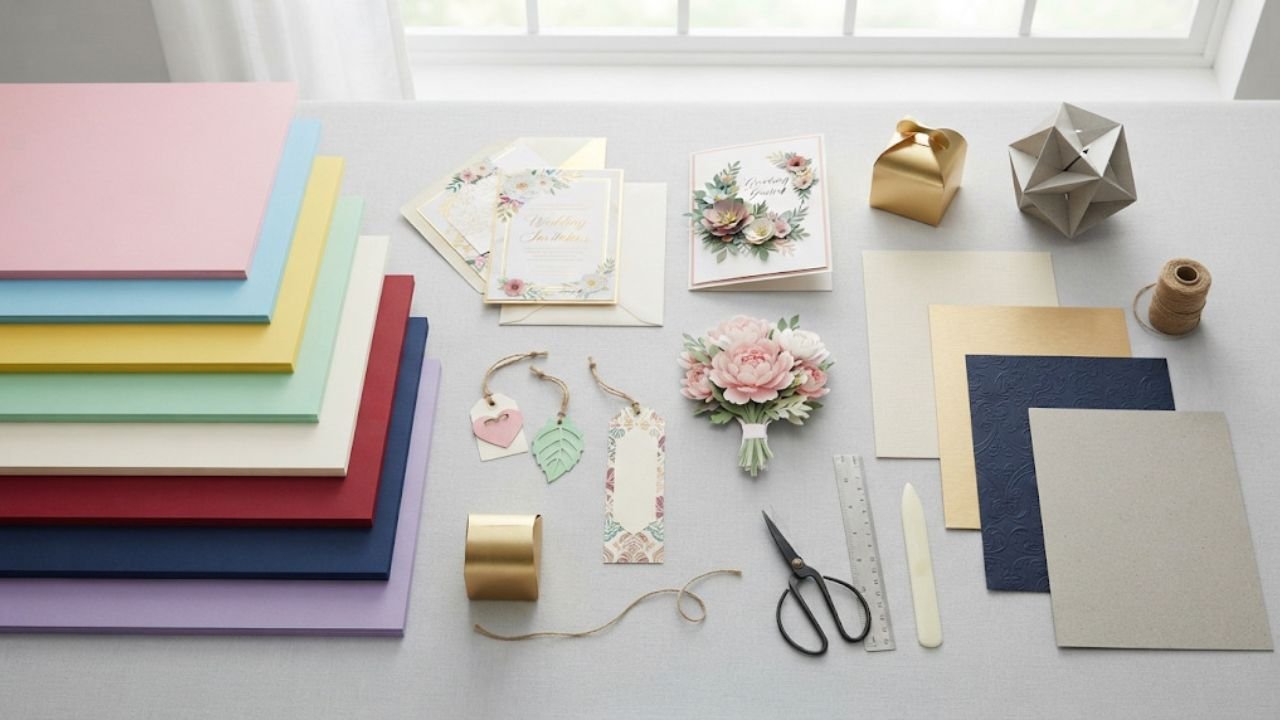
Cardstock is a thicker and heavier type of paper commonly used for projects that require additional strength and stability.
Unlike ordinary origami paper, cardstock is generally available in rectangular or large square sheets. It comes in different weights, colours, textures, and finishes.
Cardstock is particularly popular in scrapbooking, card making, invitations, paper decorations, and DIY craft projects.
Its thicker construction helps finished projects maintain their shape and stand upright.
50 Assorted Colors Premium Cardstock Paper Pack
Bring creative ideas to life with vibrant colored cardstock.
Explore endless crafting possibilities with 50 sheets of colored cardstock in 50 assorted colors. Each sheet measures 8.5 x 11 inches and features a 180 GSM (65 lb) paper weight. Ideal for origami projects, card making, scrapbooking, school activities, DIY decorations, printing, and other creative paper crafts for kids and adults.

Common characteristics of cardstock
- Thicker and more rigid than traditional origami paper.
- Available in different weights, commonly from around 160–300 GSM for craft applications.
- Offers better structural support.
- Available in plain, textured, metallic, and patterned finishes.
- Can be cut, scored, glued, and shaped.
- Suitable for projects that need a sturdy base.
Best uses for cardstock
Cardstock is ideal for:
- Handmade greeting cards.
- Birthday and wedding invitations.
- Scrapbooking.
- Paper boxes and packaging.
- 3D paper decorations.
- Gift tags and bookmarks.
- Paper models with larger, simple folds.
Although cardstock can be folded, its thickness makes detailed origami more challenging, especially when multiple layers overlap.
3. Origami Paper vs Cardstock: Key Differences
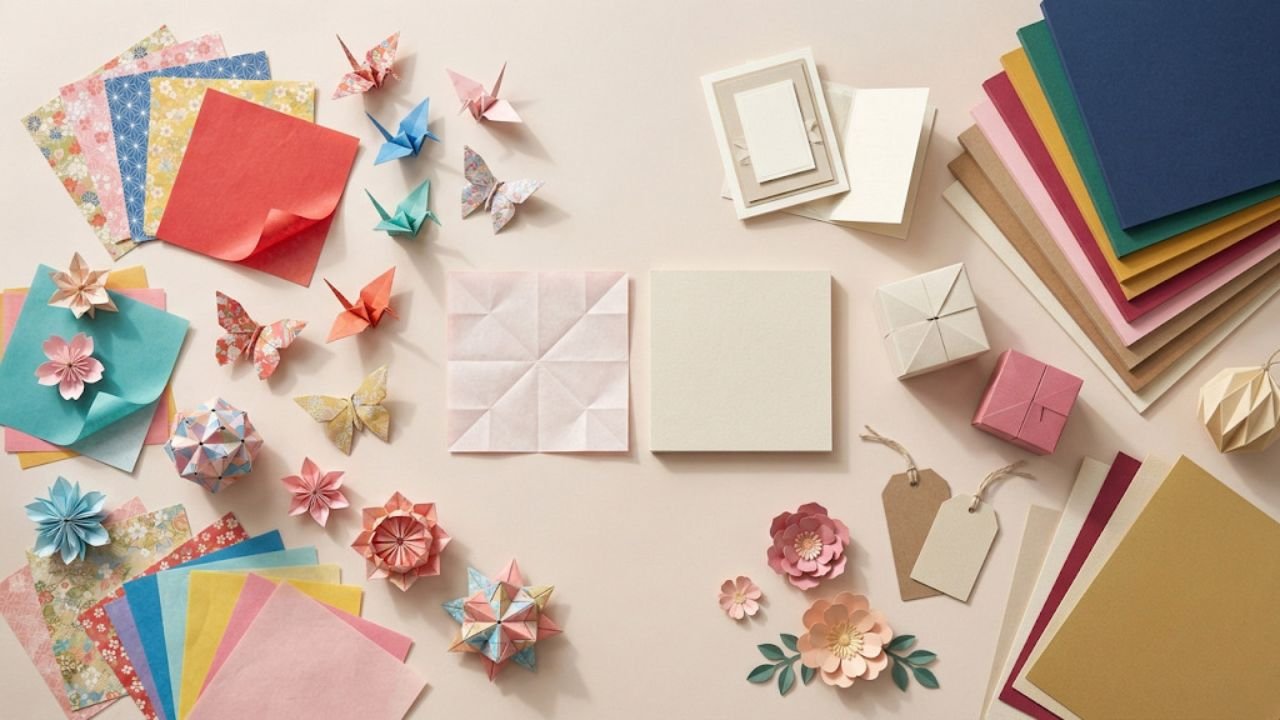
The biggest difference between origami paper and cardstock is their thickness and flexibility.
Origami paper is designed to make folding easier, while cardstock focuses more on strength and structure.
Here is a quick comparison of the two paper types:
Thickness: Origami paper is thin and lightweight, whereas cardstock is thicker and heavier.
Flexibility: Origami paper is highly flexible and easy to manipulate. Cardstock is more rigid and holds its structure better.
Folding: Origami paper is easy to fold into detailed shapes. Cardstock requires more pressure and can be difficult to fold multiple times.
Common GSM: Origami paper generally ranges from 60–80 GSM, while cardstock commonly ranges from 160–300 GSM.
Shape: Origami paper is usually available in square sheets, while cardstock is commonly available in rectangular or square sheets.
Colours: Origami paper comes in single-sided and double-sided colour options. Cardstock is available in many colours, patterns, textures, and finishes.
Multiple folds: Origami paper is better for detailed folding because it creates less bulk. Cardstock can become bulky when several layers overlap.
Durability: Origami paper durability depends on its quality and thickness, while cardstock generally provides greater rigidity and structural support.
Cutting: Origami paper is easy to cut with ordinary scissors. Cardstock may require stronger scissors or suitable craft cutters, depending on its thickness.
Best uses: Origami paper is best for folding projects, animals, flowers, and modular origami. Cardstock is better for greeting cards, invitations, packaging, and structured crafts.
Which performs better?
For traditional origami and projects involving multiple folds, origami paper is usually the better option. For handmade cards, invitations, sturdy decorations, and paper structures, cardstock is generally more suitable.
4. Understanding GSM: Why Paper Weight Matters
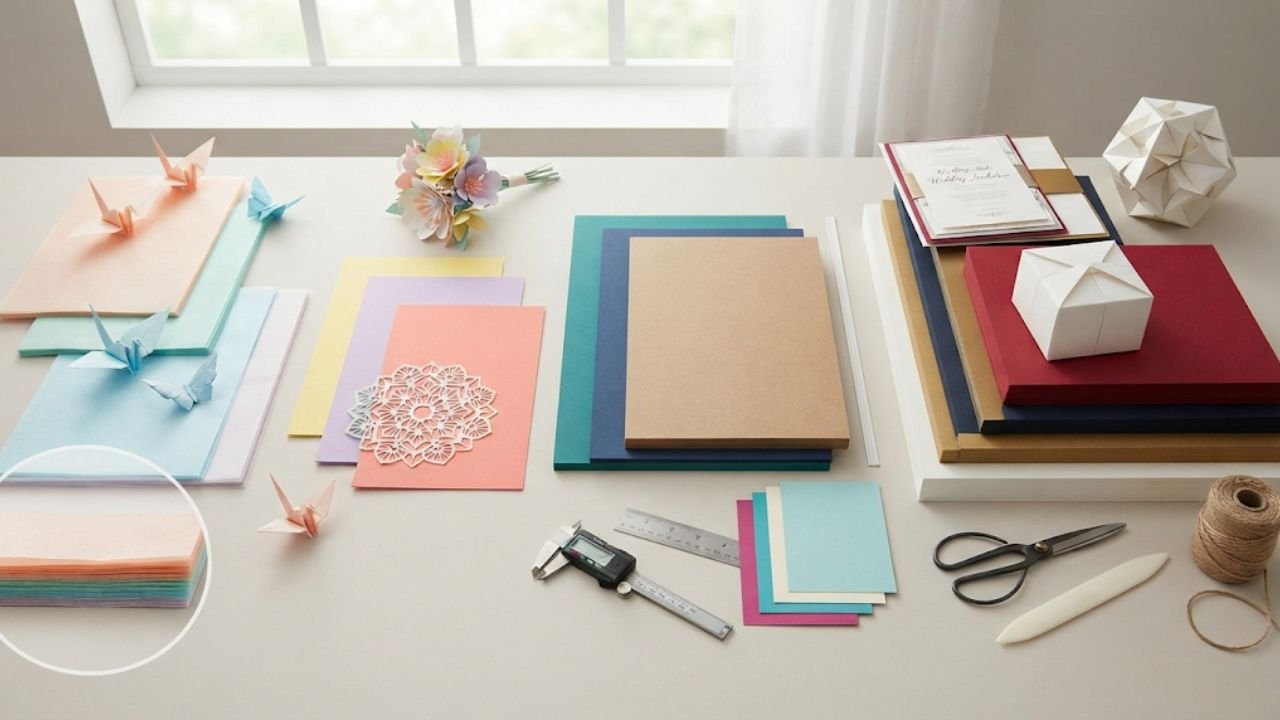
When shopping for craft paper, you may notice numbers such as 60 GSM, 80 GSM, 180 GSM, or 250 GSM.
These numbers refer to GSM, which stands for grams per square metre. It measures the weight of paper over a standard area.
In simple terms, a higher GSM usually indicates heavier paper, although actual thickness and folding behaviour also depend on the paper material, coating, and manufacturing process.
Here is a simple guide to different paper weights and their suitable applications:
40–60 GSM: Very lightweight paper, suitable for delicate and complex origami models that require thin material.
60–80 GSM: Lightweight and flexible paper, ideal for traditional origami projects such as cranes, flowers, and animals.
80–120 GSM: Medium-weight paper that works well for simple folds and general paper crafts.
120–160 GSM: Moderately thick paper, suitable for decorative crafts and simple paper structures.
160–220 GSM: Thick and sturdy paper, commonly used for handmade greeting cards, decorative projects, and 3D crafts.
220–300 GSM: Heavy and rigid cardstock, ideal for invitations, sturdy card bases, and packaging projects.
Remember that GSM measures paper weight, not folding quality alone. The material, coating, and actual thickness also influence how easily paper can be folded.
These are practical starting ranges rather than strict rules. Always consider the folding complexity and paper quality before choosing a particular weight.
Helpful tip: If you are learning origami, start with lightweight paper. As you gain experience, experiment with different paper weights to discover which materials work best for your designs.
5. Advantages and Disadvantages of Origami Paper
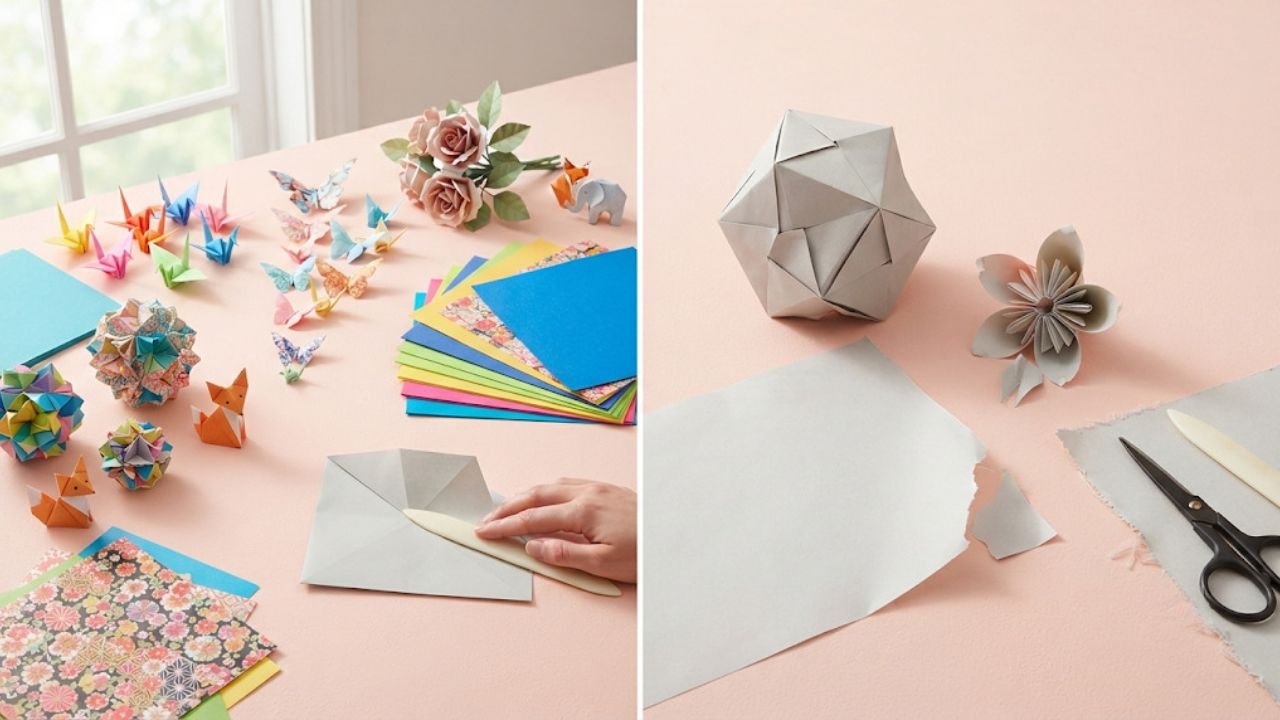
Origami paper is an excellent choice when your project involves repeated folds and detailed shapes. However, it is not suitable for every type of paper craft.
Advantages
1. Easy folding
Its lightweight construction makes it easier to create sharp creases, corners, and detailed shapes.
2. Perfect for creative designs
Origami paper is available in many colours and patterns, allowing you to create colourful animals, flowers, and decorations.
3. Suitable for beginners
Pre-cut square sheets make it convenient for people who are learning basic origami techniques.
4. Better for multiple folds
Thin paper creates less bulk when several layers overlap, helping maintain the shape of detailed models.

Vintage Scrapbook Paper Kit Set for Crafting
Comprehensive set for creative journaling fun
This vintage scrapbook paper kit includes 565 pieces encompassing decorative papers and stickers, ideal for all crafting and journaling needs. With various themes, it’s perfect for creating unique scrapbooks that inspire creativity and personal expression.
Disadvantages
- Can tear if handled roughly.
- May not provide enough structural strength for large standalone decorations.
- Some lightweight varieties can lose their shape more easily.
- Not ideal for projects requiring a thick and rigid base.
6. Advantages and Disadvantages of Cardstock
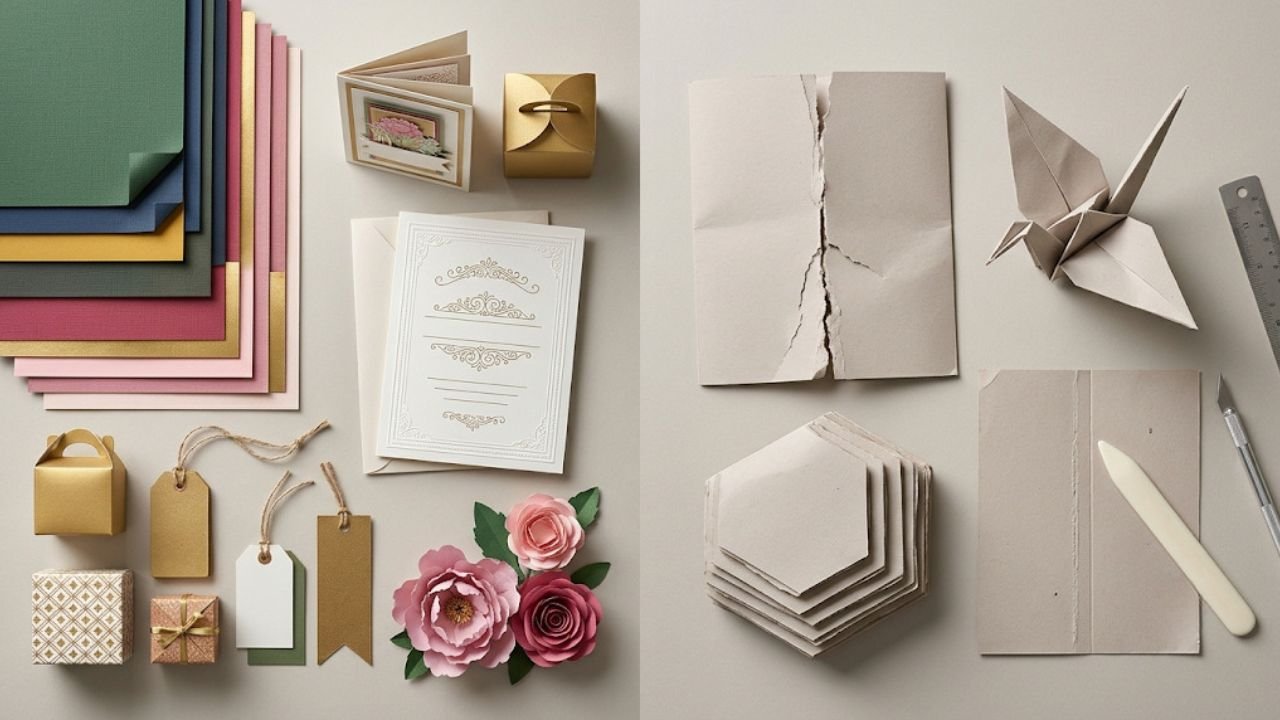
Cardstock is a popular option for crafters who need a stronger and more durable paper material.
Advantages
1. Strong and durable
Cardstock is generally more resistant to bending and handling than lightweight origami paper.
2. Holds its structure
It works well for paper boxes, greeting cards, decorative signs, and projects that need to stand upright.
3. Different finishes and textures
You can find smooth, matte, glossy, textured, metallic, and patterned cardstock.
4. Excellent for DIY projects
It is useful for cutting shapes, layering designs, creating invitations, and making handmade decorations.
Disadvantages
- Difficult to use for intricate origami folds.
- Can crack or show whitening along sharp folds.
- Multiple layers can make the finished model bulky.
- Some thick varieties require scoring before folding.
7. Can You Use Cardstock for Origami?
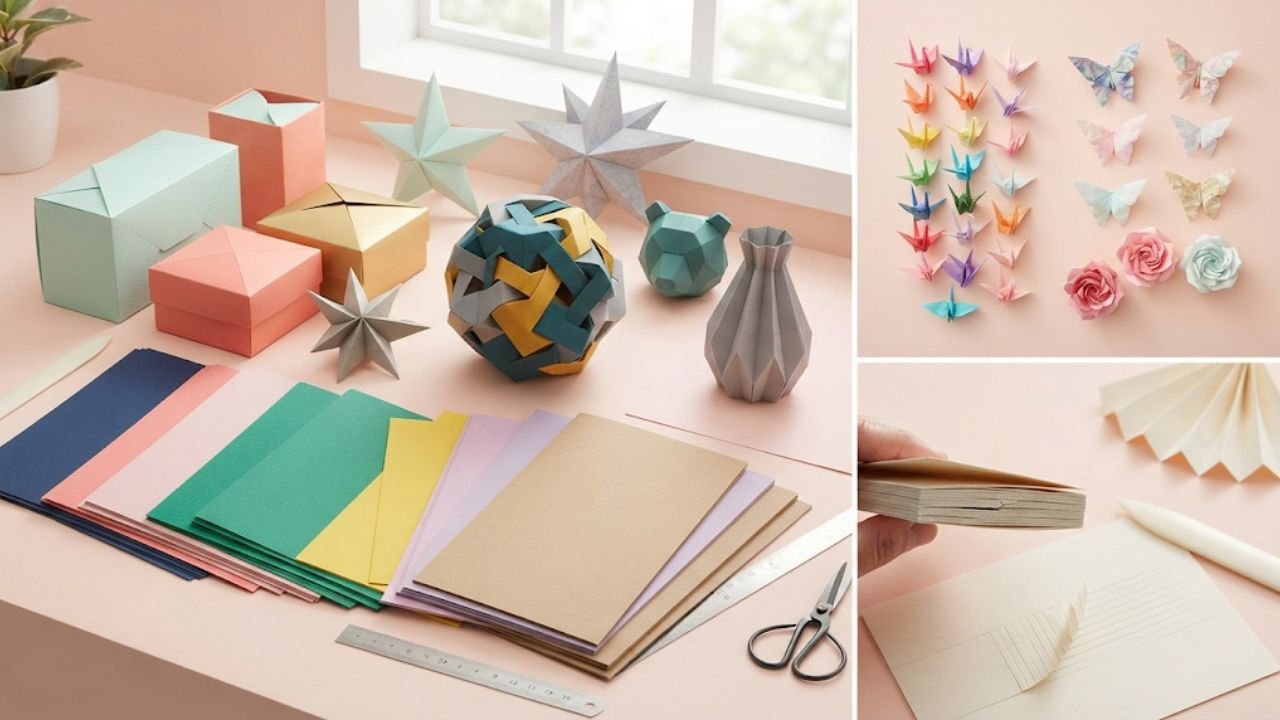
Yes! You can use cardstock for certain origami-inspired projects, but it is not the best choice for every traditional origami model.
The main challenge is thickness. When you fold cardstock multiple times, the layers become bulky, making it difficult to create small points, narrow corners, and detailed shapes.
However, lightweight cardstock can be useful for simple geometric models and larger paper structures.
Origami projects that can work with cardstock
- Simple paper boxes.
- Large geometric shapes.
- Decorative stars with a few folds.
- Basic folded paper ornaments.
- Large modular units designed for thicker paper.
For traditional origami animals, cranes, flowers, and models with many folds, lightweight origami paper is generally a better choice.
If you want to experiment with cardstock, start with a lighter variety and test a simple design before using it for a larger project.
8. Which Paper Is Best for Different Craft Projects?
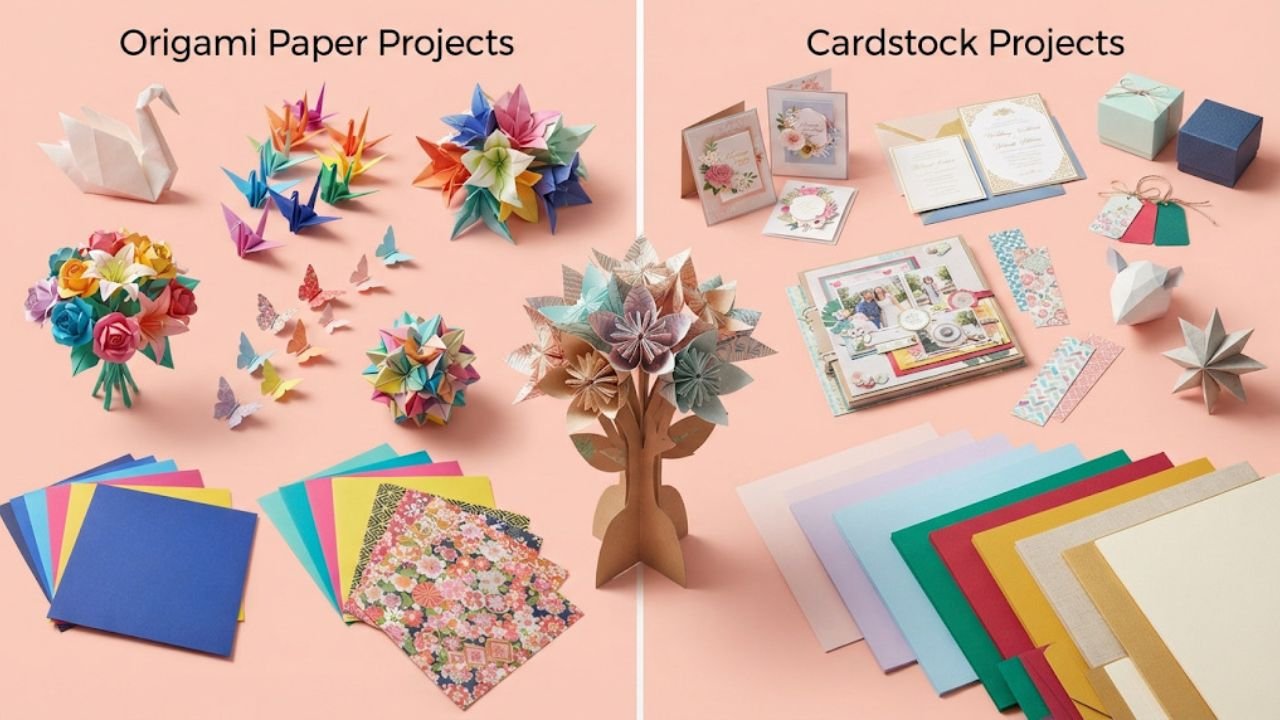
The easiest way to choose between origami paper and cardstock is to consider what you want to create.
- Origami Swan: Origami paper is the better choice because it is flexible and easy to fold into detailed shapes.
- Paper Crane: Origami paper works best because it supports multiple folds and detailed creases.
- Origami Flowers: Origami paper is ideal for creating delicate petals and colourful floral designs.
- Modular Origami: Lightweight origami paper is recommended because it keeps multiple folded layers manageable.
- Greeting Cards: Cardstock is better because it provides a sturdy base for handmade cards.
- Wedding Invitations: Cardstock is suitable because it offers a premium appearance and a firm structure.
- Paper Boxes: Cardstock or suitable craft paper provides additional strength and helps boxes maintain their shape.
- Scrapbooking: Cardstock works well because it supports layered decorations, photographs, and embellishments.
- Gift Tags: Cardstock is preferable because it is more durable and can handle regular use.
- 3D Paper Decorations: The best choice depends on the design. Lightweight origami paper works well for folded elements, while cardstock is useful for structural parts.
For larger decorative models, you can also combine different materials. For example, use lightweight origami paper to create folded decorative elements and cardstock to provide a supporting base. This combination allows you to create attractive projects while maintaining the strength and stability of the finished design.
9. Can You Combine Origami Paper and Cardstock?
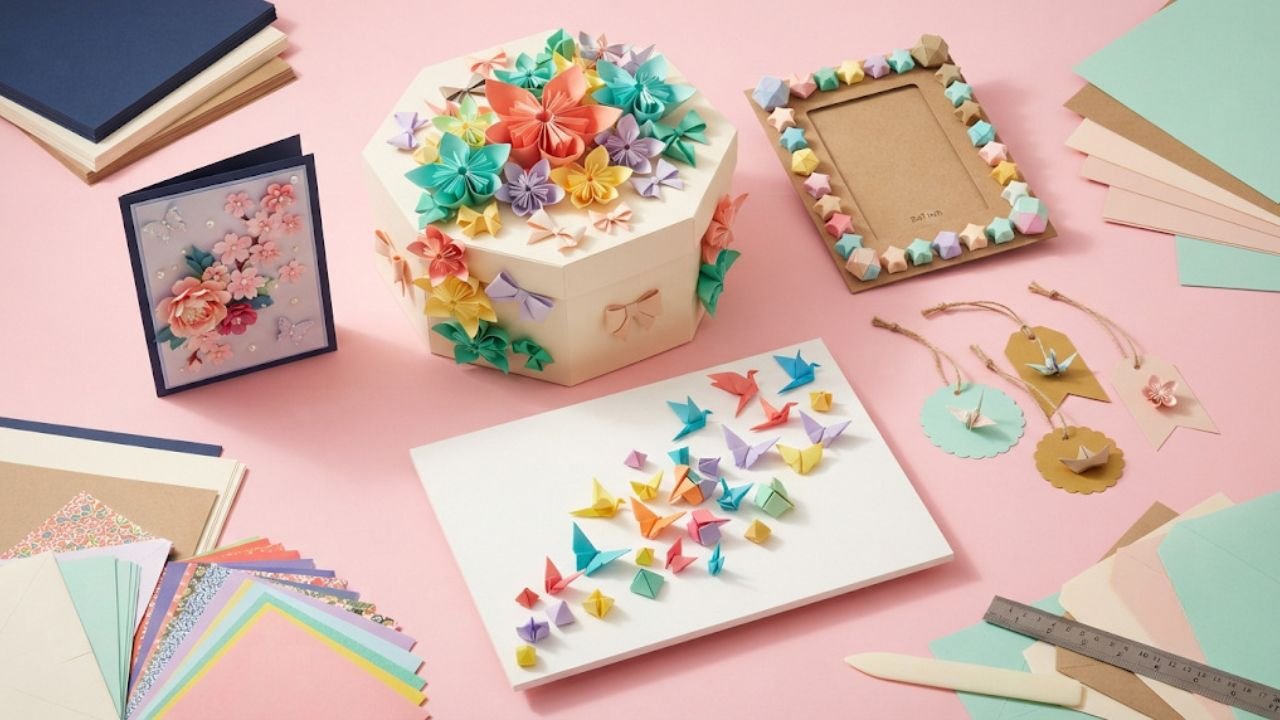
Absolutely! Combining different types of paper can help you create interesting and attractive handmade projects.
Instead of choosing only one material, you can use origami paper and cardstock together.
Here are some creative ideas:
1. Handmade greeting cards
Use cardstock as the card base and add small origami flowers or butterflies as decorations.
2. Decorative photo frames
Create a sturdy cardstock frame and decorate its borders with colourful folded paper shapes.
3. Paper gift boxes
Use cardstock to build the main box and lightweight origami paper to create decorative flowers, bows, or other embellishments.
4. Wall decorations
Combine cardstock backgrounds with colourful origami birds, butterflies, or geometric shapes.
5. Handmade gift decorations
Use cardstock for gift tags and origami paper to create small decorative ornaments.
Combining both materials gives you the flexibility to create projects that are both attractive and structurally strong.
10. What Should Beginners Buy First?
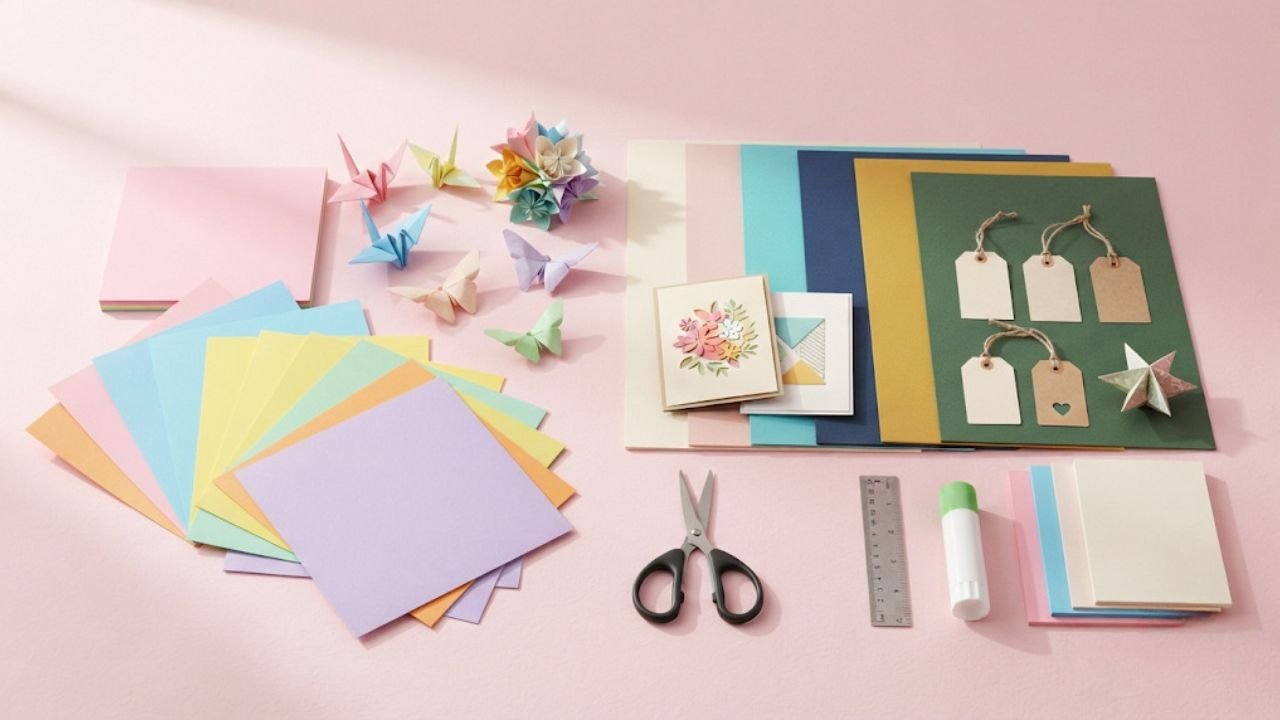
If you are new to paper crafts, you do not need to purchase every type of paper immediately.
Start with a small collection of versatile materials and expand your supplies as your projects become more advanced.
We recommend the following:
For origami beginners:
- A pack of 15 × 15 cm origami paper.
- Assorted colours.
- Lightweight paper around 60–80 GSM.
- Double-sided coloured paper for models that show both sides.
For DIY craft beginners:
- A small pack of coloured cardstock.
- Medium-weight sheets around 160–220 GSM.
- A pair of good craft scissors.
- A ruler and glue.
Kool Krafts Origami Paper Kit with 25 Projects
Explore colorful paper folding with patterns and guided projects.
Spark creativity with this 350-sheet origami kit featuring 300 square sheets in 20 vibrant colors and 50 traditional Japanese pattern sheets. Each sheet measures 6 × 6 inches and has a 70 GSM matte finish for crisp folds. The kit also includes an illustrated book with 25 easy projects, making it ideal for children aged 8–12, beginners, and family craft activities.

For people interested in both:
Start with one origami paper pack and one cardstock pack. This gives you enough flexibility to explore folding, card making, decorations, and other creative paper projects.
You can also explore our Craft Supplies & Tools category for more paper crafting inspiration and useful supplies.
11. Final Verdict: Origami Paper or Cardstock?
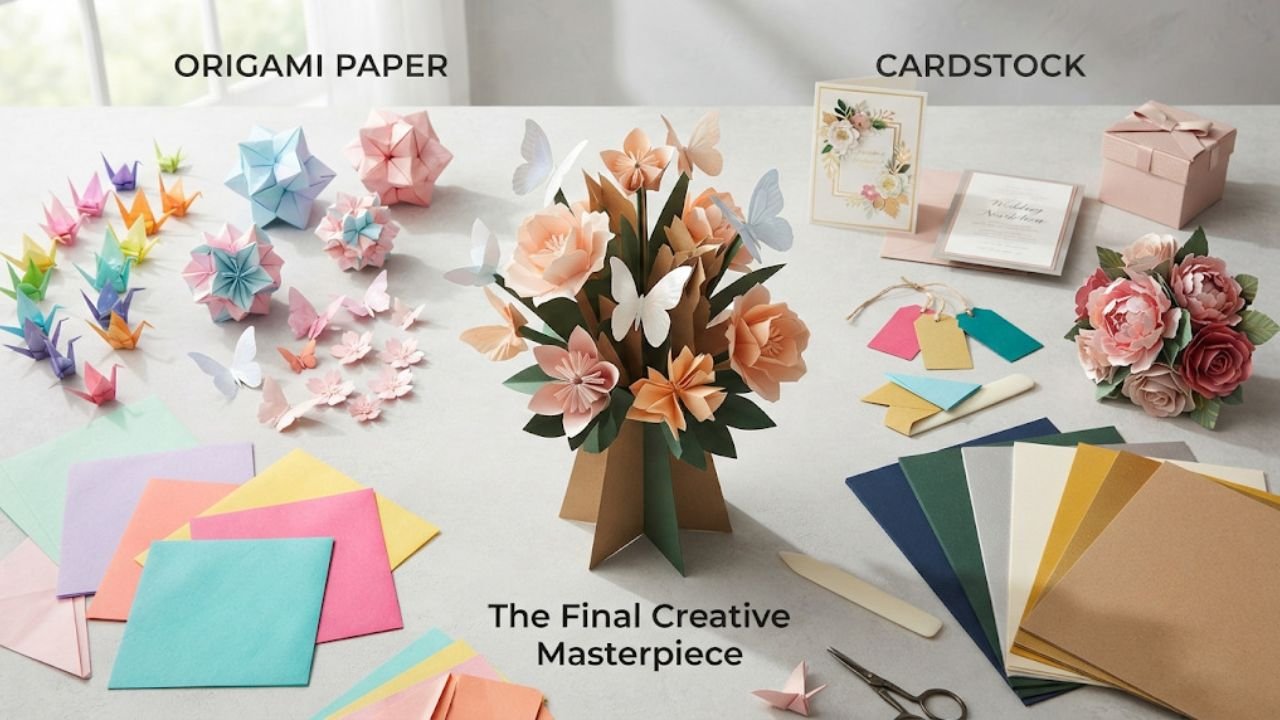
So, which paper is better?
The answer depends on your project.
Choose origami paper if you enjoy folding animals, birds, flowers, modular designs, and detailed paper models. Its lightweight construction makes folding easier and helps prevent excessive thickness.

500 Sheets Japanese Washi Pattern Origami Paper
Create beautiful origami art with colorful traditional patterns.
Explore creative possibilities with 500 high-quality origami paper sheets featuring 12 unique Japanese Washi patterns. Each 6 x 6 inch (15 cm) square has a decorative printed design on one side and a coordinating solid color on the reverse. The pack also includes instructions for 6 easy origami projects, making it suitable for beginners, paper craft enthusiasts, and experienced origami artists.
Choose cardstock if you want to create handmade cards, invitations, gift tags, paper boxes, scrapbooks, and decorations that need a sturdy structure.
If you enjoy different types of paper crafts, keeping both materials in your collection is a practical choice.
At Tulsi Origami, we believe creativity starts with simple materials and imaginative ideas. The right paper can help transform an ordinary sheet into something beautiful, whether it is a delicate folded flower or an impressive handmade decoration.
Start experimenting, discover your favourite materials, and create something unique with paper!
Frequently Asked Questions (FAQs)
1. Is origami paper better than cardstock?
For traditional origami, yes. Origami paper is thinner and easier to fold into detailed shapes. Cardstock is better for projects that need strength and structure.
2. Can I make origami with regular cardstock?
You can make simple folded designs using lightweight cardstock, but thick cardstock is generally unsuitable for complex origami models with multiple layers.
3. What GSM paper is best for origami?
Around 60–80 GSM is a useful starting range for traditional origami. Thinner specialty paper may work better for intricate designs, while slightly heavier paper can suit larger or simpler models.
4. What GSM cardstock is best for crafts?
Around 160–220 GSM is a useful starting range for many handmade cards and decorative projects. Heavier 220–300 GSM cardstock is suitable for sturdy card bases and invitations.
5. Can I use origami paper for handmade greeting cards?
Yes. You can use origami paper for decorative elements such as folded flowers, butterflies, and other shapes. However, cardstock is usually better for the main card base.
6. What is the difference between craft paper and origami paper?
Craft paper is a broad category that includes many types of paper used for creative projects. Origami paper is specifically suited to folding and is commonly supplied in square sheets.
7. Which paper is best for 3D origami?
For modular 3D origami, lightweight paper is usually preferable because each model contains many folded units. Paper that is too thick can make the final structure bulky.
8. Is double-sided origami paper worth buying?
Yes. Double-sided origami paper is particularly useful when both sides of a finished model are visible. It also provides more colour possibilities for decorative projects.
Comments
0 approved comment(s)
No comments yet. Be the first to share your thoughts!
More from Craft Supplies & Tools
Dive into more creative origami ideas, stories, and inspiration.

Best Origami Paper for Beginners: Sizes, Colors and Types Explained
Have you ever tried making an origami crane, butterfly, flower or paper swan but struggled to get clean folds? Sometimes the problem is not your folding technique. It is the paper you are using.
Read more
12 Essential Origami Tools Every Paper Craft Lover Should Have
Origami is a beautiful art of transforming simple sheets of paper into amazing creations. From delicate paper flowers and elegant cranes to decorative swans, modular designs, and intricate 3D sculptures, paper folding offers endless creative possibilities.
Read more