
Craft Supplies & Tools ● 21 Nov 2026
Best Glue for Paper Crafts: How to Choose the Right Adhesive
Paper crafting is a wonderful way to turn simple sheets of paper into beautiful handmade creations. Whether you enjoy making origami models, greeting cards, paper flowers, scrapbooks, decorative boxes, or DIY home decorations, choosing the right adhesive is an important part of achieving a neat and long-lasting result.

But with so many options available, how do you know which is the best glue for paper crafts?
Some adhesives are perfect for lightweight origami paper, while others work better for thick cardstock, layered decorations, or three-dimensional paper structures. Using the wrong glue can cause wrinkles, stains, loose folds, or unwanted bumps that affect the appearance of your finished project.
In this guide, we will explore different types of paper adhesives, their uses, advantages, and limitations. You will also learn how to choose the right glue for origami, cardstock, scrapbooking, and other creative paper projects.
Why Choosing the Right Glue Matters for Paper Crafts
Paper is a delicate material. Unlike wood, plastic, or metal, it can absorb moisture easily and lose its original shape when exposed to excessive liquid adhesive.
The right glue should provide a reliable bond without damaging the paper's appearance.
Here are some important reasons to choose your adhesive carefully:
- Strong bonding: Your paper layers should remain securely attached after drying.
- Clean finishing: The adhesive should not leave visible stains, lumps, or unwanted marks.
- Minimal wrinkles: Too much moisture can cause thin paper to wrinkle or curl.
- Easy application: A suitable applicator helps you control the amount of glue.
- Long-lasting results: The adhesive should suit the expected lifespan of your handmade creation.
Remember, the strongest adhesive is not always the best choice. For delicate paper projects, precision and controlled application are often more important than maximum bonding strength.
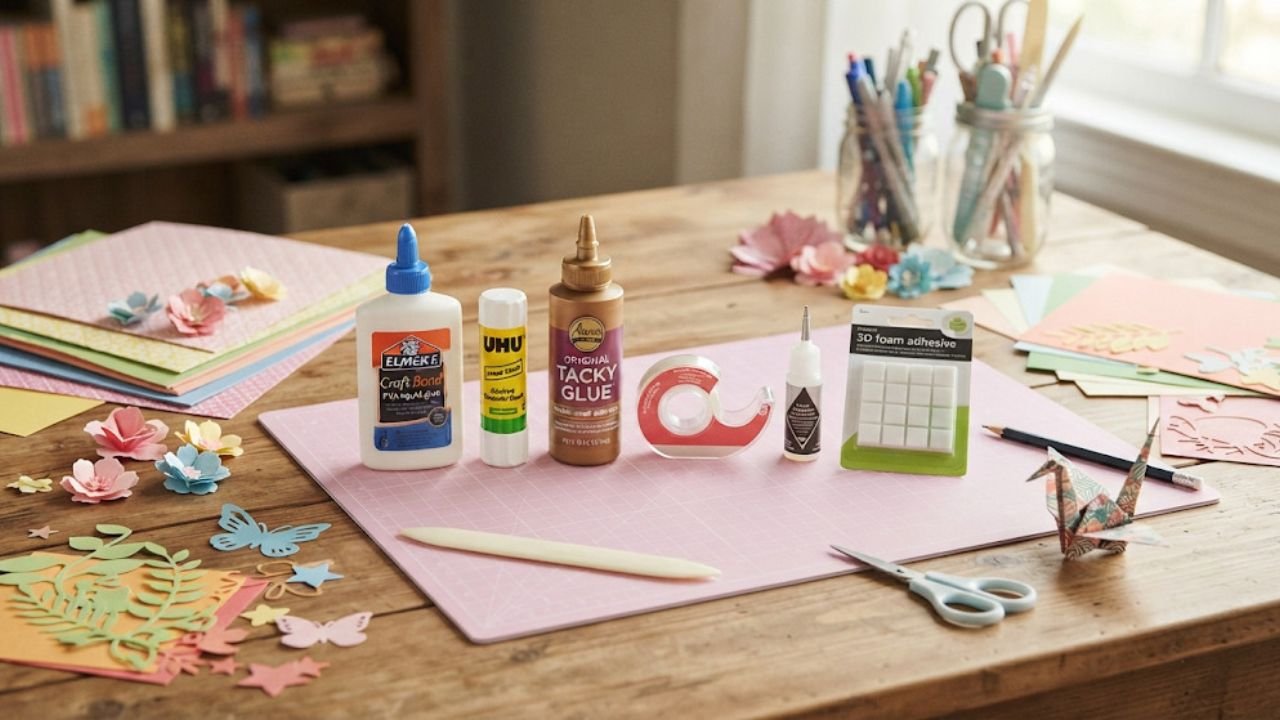
Different Types of Glue for Paper Crafts
Let's look at the most commonly used adhesives and understand which projects they are best suited for.
1. PVA Glue (White Craft Glue)
PVA (Polyvinyl Acetate) glue is one of the most popular adhesives for paper crafting. It is commonly available as white liquid glue and usually dries transparent or clear, depending on the product.
PVA glue is useful for joining paper layers, attaching cardstock, assembling paper models, and creating dimensional decorations.
Best uses:
- Three-dimensional paper crafts
- Cardstock projects
- Paper flowers and decorative models
- Paper boxes and gift packaging
- Layered paper artwork
Advantages:
- Provides a strong bond for many paper materials.
- Easy to spread with a small brush or precision applicator.
- Offers some working time for adjusting paper pieces.
- Many craft-specific versions dry clear.
Things to consider:
PVA glue is water-based, so applying too much can wrinkle thin paper. Use a small quantity and spread it evenly. For important keepsakes, look for products specifically labelled acid-free or pH-neutral rather than assuming every PVA formula has those properties.
2. Glue Sticks
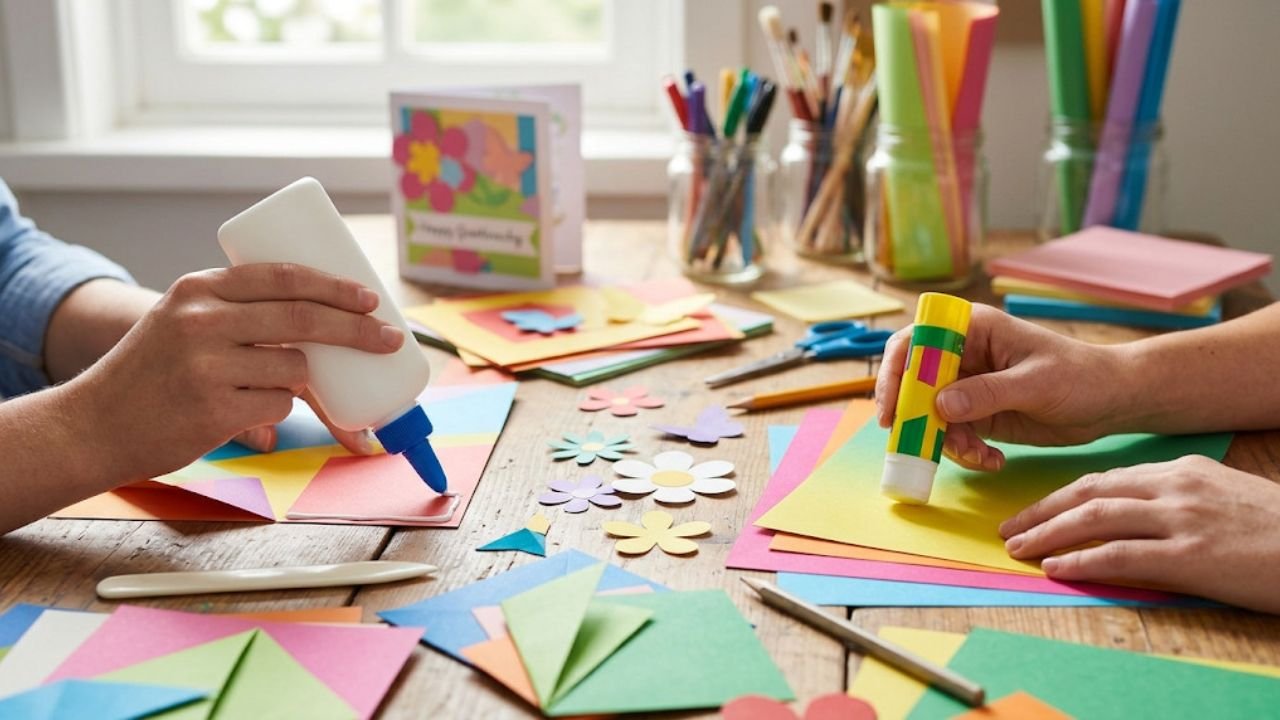
Glue sticks are convenient, beginner-friendly adhesives that are especially useful for simple paper projects.
They contain relatively little moisture compared with liquid glue, making them a good option for lightweight paper and flat applications.
Best uses:
- School craft projects
- Paper collage
- Greeting cards
- Lightweight paper layering
- Simple origami decorations that require adhesive
Advantages:
- Easy and mess-free application.
- Convenient for beginners and children.
- Less likely to wrinkle paper than many liquid adhesives.
- Portable and simple to store.
Things to consider:
Glue sticks may not provide enough bonding strength for heavy embellishments or three-dimensional structures. For projects involving thick cardstock or pieces under tension, consider a suitable liquid craft glue or double-sided tape.
3. Tacky Glue
Tacky glue is a thicker type of craft adhesive designed to provide a good initial grip.
It is particularly useful when you need paper components to stay in position while the adhesive dries.
Best uses:
- Layered cardstock decorations
- Paper flowers
- Decorative paper models
- Craft embellishments
- Lightweight mixed-media projects
Advantages:
- Thicker consistency provides better application control.
- Useful for attaching small decorative elements.
- Helps hold pieces in position during assembly.
Things to consider:
Its thicker consistency can leave visible marks if applied excessively. Always test it on a small paper sample before using it on delicate or valuable materials.
4. Double-Sided Tape
Double-sided tape is an excellent option when you want a clean, flat, and quick bond without waiting for liquid glue to dry.
It has adhesive on both sides and is commonly available in different widths and thicknesses.
Best uses:
- Greeting cards
- Scrapbooking
- Gift tags
- Paper invitations
- Flat cardstock layering
Advantages:
- No liquid mess.
- Instant bonding after application.
- Helps prevent moisture-related paper wrinkles.
- Produces neat edges when applied carefully.
Things to consider:
Not every double-sided tape has the same adhesive strength. Some tapes may lose their grip over time or perform poorly on textured surfaces. Choose a suitable permanent or acid-free product when needed.
5. Liquid Glue Pens and Precision Applicators
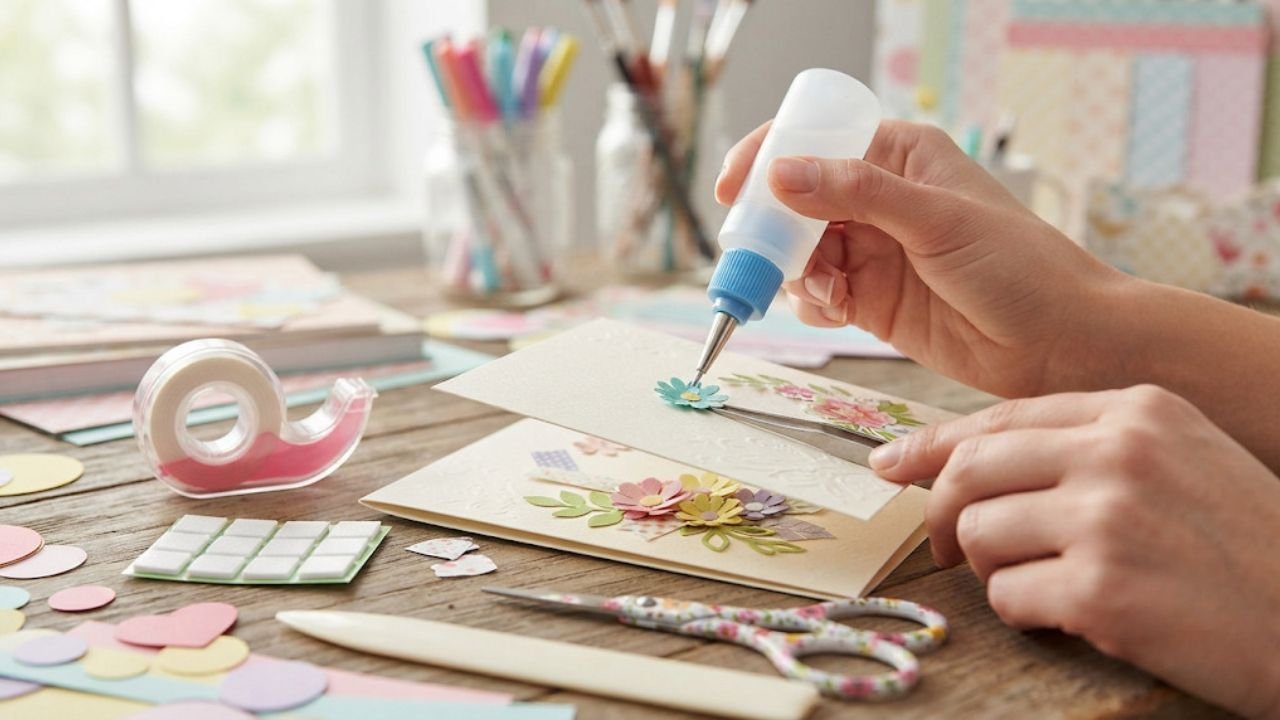
Liquid glue pens are designed for accurate application. They are especially helpful when working with tiny paper pieces or intricate designs.
Instead of spreading glue over a large area, you can apply small dots or narrow lines exactly where needed.
Best uses:
- Quilling projects
- Miniature paper decorations
- Origami embellishments
- Small paper cutouts
- Detailed handmade greeting cards
Advantages:
- Greater application control.
- Useful for intricate designs.
- Helps reduce unnecessary glue usage.
- Suitable for attaching small decorative components.
Things to consider:
Check the applicator tip regularly because dried glue can block narrow openings. Avoid squeezing too much adhesive onto small paper pieces.
6. Foam Adhesive Squares and Tape
Foam adhesive squares and foam tape are different from traditional liquid glue. They are designed to create a raised effect between paper layers.
They are especially popular in handmade greeting cards and scrapbook designs.
Best uses:
- 3D greeting cards
- Layered scrapbook pages
- Raised paper decorations
- Handmade invitations
- Decorative paper compositions
Advantages:
- Adds dimension and depth.
- No drying time.
- Easy to apply.
- Creates attractive layered effects.
Things to consider:
Foam adhesives add thickness and are not ideal for delicate origami folds or projects that need to remain completely flat.
Quick Comparison: Which Adhesive Should You Choose?
Here is a simple comparison to help you select the right adhesive for your next project.
PVA Glue: Best for 3D paper crafts and cardstock. It provides a strong liquid bond.
Glue Stick: Best for lightweight paper and collage projects. It offers easy, low-mess application.
Tacky Glue: Best for decorative paper elements. Its thicker consistency helps with controlled application.
Double-Sided Tape: Best for greeting cards and flat paper layering. It provides clean, instant bonding without liquid mess.
Liquid Glue Pen: Best for quilling and tiny paper details. It allows precise adhesive application.
Foam Adhesives: Best for 3D greeting cards and scrapbooking. They create attractive raised decorative effects.
There is no single adhesive that works perfectly for every project. Your choice should depend on the type of paper, the design, and the strength required.
What Is the Best Glue for Origami?
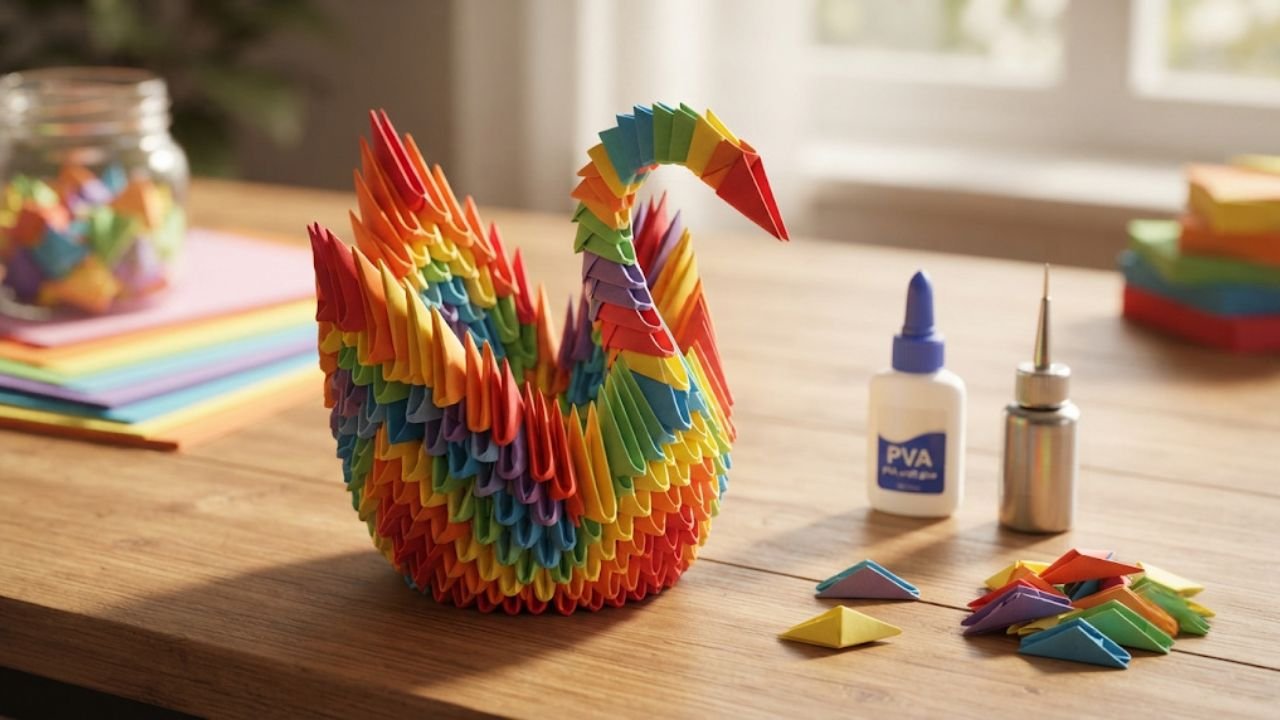
Traditional origami is generally created by folding paper without using glue. However, adhesive can be useful for modular origami, decorative paper models, and certain three-dimensional origami creations.
For these projects, choosing an adhesive that does not affect the appearance of the folds is especially important.
Here are some practical recommendations:
For modular origami: Use a small amount of PVA craft glue or a precision-tip liquid adhesive when you need to secure individual modules.
For thin origami paper: A glue stick or carefully controlled application of liquid glue can work for lightweight attachments. Always test the adhesive first.
For 3D origami sculptures: PVA craft glue is a practical option for securing individual paper modules and creating stable decorative structures.
For small decorative details: Use a precision glue pen to attach tiny paper components without spreading adhesive over surrounding folds.
At Tulsi Origami, we appreciate how small details and careful paper assembly can transform simple paper pieces into beautiful handmade creations. The right adhesive can help improve the stability and finishing of certain modular paper art projects.
How to Choose the Best Glue for Different Paper Types
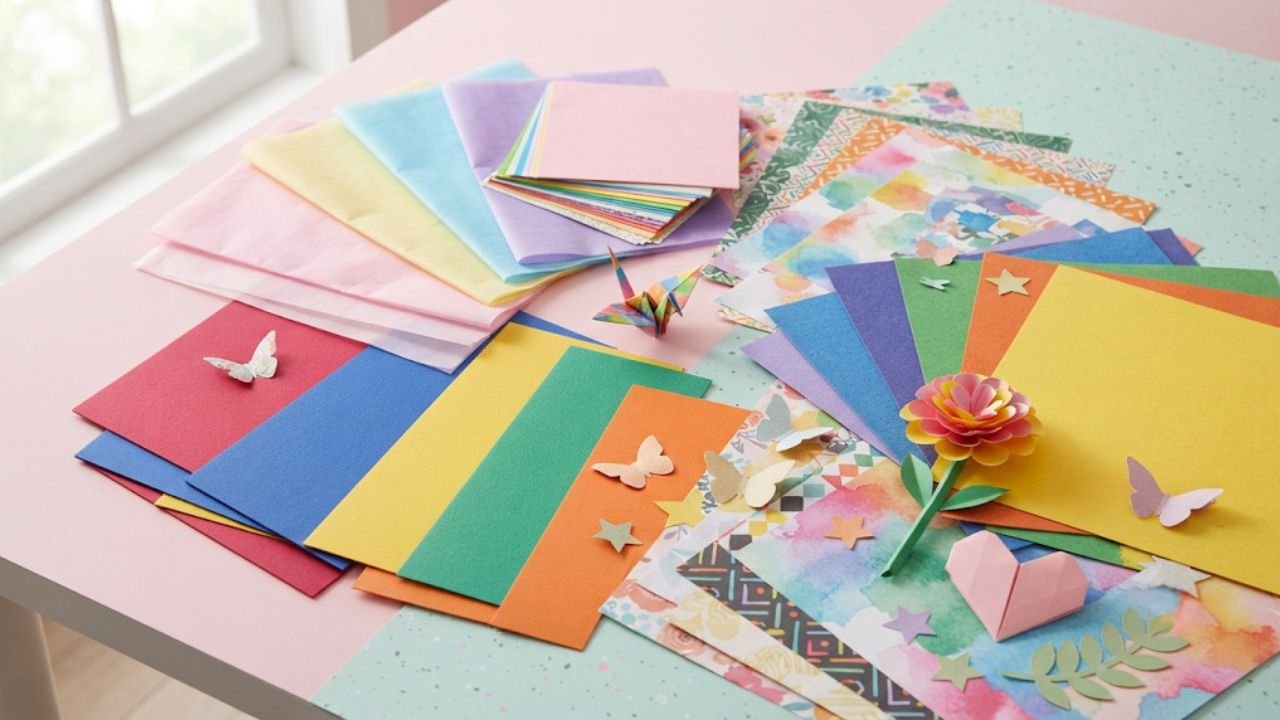
Different papers react differently to adhesives. Understanding your material will help you avoid common crafting problems.
Thin Origami Paper
Thin paper absorbs moisture quickly and can become wrinkled when too much liquid glue is applied.
Choose a glue stick or use very small amounts of liquid adhesive with a fine-tip applicator.
Cardstock
Cardstock is thicker and generally works well with PVA glue, tacky glue, or double-sided tape.
For large flat panels, double-sided tape can provide a clean finish without introducing moisture.
Construction Paper
Construction paper is often porous and absorbent. Glue sticks and standard craft PVA can both work, depending on the thickness and texture.
Apply liquid glue sparingly to avoid excessive moisture.
Tissue Paper
Tissue paper is extremely delicate and can tear or wrinkle easily.
Use a gentle adhesive application and test it on a spare piece first. Applying adhesive to the backing surface rather than directly coating the tissue can help reduce damage.
Patterned and Coated Paper
Glossy or coated paper may be difficult to bond using ordinary glue sticks.
Consider a compatible double-sided tape or craft adhesive designed for coated surfaces. Always test the bond before assembling the final project.
Important Tips for Using Glue in Paper Crafts
Even a good adhesive can produce poor results if it is not applied correctly.
Follow these practical tips to improve your crafting experience.
1. Always test before applying
Try the adhesive on a small piece of the same paper before using it on your final design.
2. Use less glue
Applying excessive glue can create wrinkles, visible residue, and uneven surfaces. Start with a small quantity.
3. Spread liquid glue evenly
Use a fine brush, precision applicator, or small spreader to distribute liquid adhesive across the required area.
4. Keep your workspace clean
Place scrap paper underneath your project to protect your table and prevent unwanted glue marks.
5. Allow sufficient drying time
Do not move or fold glued pieces too quickly. Follow the manufacturer's drying instructions and allow the bond to set properly.
6. Store adhesives correctly
Keep glue containers tightly closed and follow the manufacturer's storage instructions to prevent the adhesive from drying out.
7. Choose acid-free products for keepsakes
For scrapbooks, photographs, memory books, and important paper artwork, look for adhesives explicitly labelled acid-free or archival where appropriate.
Common Glue Mistakes to Avoid
If your paper crafts are not turning out as expected, the problem may be related to how you are using the adhesive.
Avoid these common mistakes:
- Using too much liquid glue on thin origami paper.
- Applying ordinary glue without checking its compatibility with coated paper.
- Choosing hot glue for delicate flat paper designs where thick glue lines may be visible.
- Folding paper before the adhesive has set.
- Using old or dried-out adhesive.
- Applying glue unevenly across large paper surfaces.
- Assuming every product labelled PVA is acid-free or suitable for archival projects.
A little patience and the right application technique can make a significant difference to your finished paper artwork.
Essential Adhesives Every Paper Craft Beginner Should Have
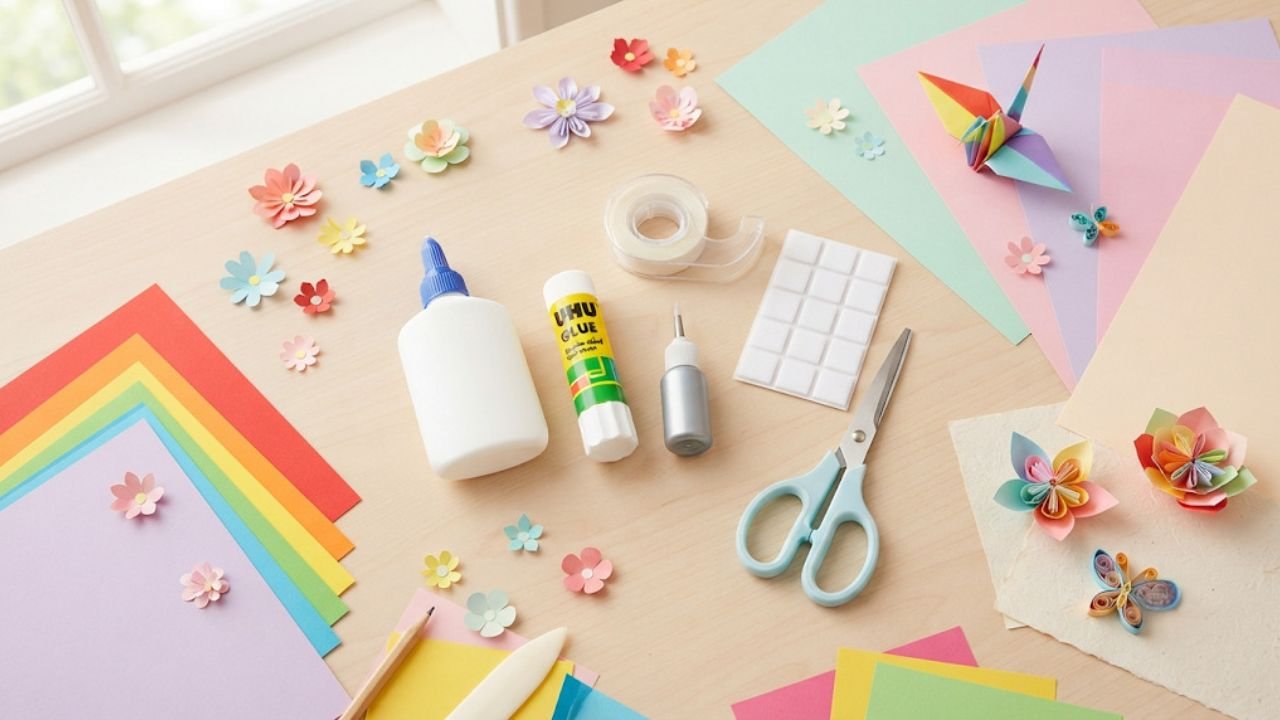
If you are just starting your paper crafting journey, you do not need to purchase every adhesive available.
A small collection of versatile supplies is enough for many everyday projects.
We recommend starting with:
- One quality glue stick: For lightweight paper, collage, and simple craft projects.
- One bottle of PVA craft glue: For assembling paper models, cardstock, and dimensional decorations.
- One roll of double-sided tape: For clean card-making and flat paper layering.
- One precision-tip glue applicator: For small details and intricate paper designs.
- Foam adhesive squares: For raised effects in handmade cards and scrapbook layouts.
As you gain experience, you can add specialised adhesives depending on the types of projects you enjoy making.
Frequently Asked Questions
What is the best glue for paper crafts?
PVA craft glue is a versatile option for many paper craft projects, especially cardstock, paper models, and three-dimensional decorations. Glue sticks are better suited to lightweight paper, while double-sided tape works well for flat applications.
What glue is best for origami?
Traditional origami usually does not require glue. For modular origami and three-dimensional paper sculptures, a small amount of PVA craft glue or precision liquid adhesive can help secure individual paper pieces.
How do I glue paper without making wrinkles?
Use a glue stick or double-sided tape for flat paper applications. If using liquid glue, apply a very thin and even layer and avoid adding excessive moisture.
Is PVA glue good for cardstock?
Yes. PVA craft glue is commonly used for cardstock and layered paper projects. Apply it evenly and allow it to dry properly. Double-sided tape is another good option for flat cardstock panels.
Can I use hot glue for paper crafts?
Hot glue can attach bulky decorative components and some rigid craft elements. However, it can create thick, visible glue lines and may damage delicate paper through heat. It is generally not the first choice for fine paper folding or flat paper designs.
Is acid-free glue important for scrapbooking?
Yes, particularly when preserving photographs, important documents, and memory books. Acid-free or archival-labelled adhesives are preferable for projects intended to last. Check the manufacturer's product specifications before purchasing.
Final Thoughts
Choosing the best glue for paper crafts does not have to be complicated. The important thing is to match the adhesive to your paper, project, and desired finish.
PVA glue is a versatile choice for many three-dimensional paper creations, glue sticks are convenient for lightweight paper, double-sided tape provides clean flat bonding, and precision glue pens help with intricate details.
Start with a few reliable adhesives, experiment with different techniques, and discover what works best for your creative projects.
At Tulsi Origami, we believe every piece of paper has the potential to become something special. With the right materials, patience, and creativity, even simple paper can be transformed into beautiful handmade art.
Explore more creative paper folding ideas, tutorials, and inspiration at Tulsi Origami and let your imagination take shape!
Comments
0 approved comment(s)
No comments yet. Be the first to share your thoughts!
More from Craft Supplies & Tools
Dive into more creative origami ideas, stories, and inspiration.

Best Origami Paper for Beginners: Sizes, Colors and Types Explained
Have you ever tried making an origami crane, butterfly, flower or paper swan but struggled to get clean folds? Sometimes the problem is not your folding technique. It is the paper you are using.
Read more
12 Essential Origami Tools Every Paper Craft Lover Should Have
Origami is a beautiful art of transforming simple sheets of paper into amazing creations. From delicate paper flowers and elegant cranes to decorative swans, modular designs, and intricate 3D sculptures, paper folding offers endless creative possibilities.
Read more
Origami Paper vs Cardstock: Which Paper Is Best for Your Projects?
Choosing the right paper can make a big difference in the quality of your paper crafts. Whether you enjoy folding beautiful origami animals, creating handmade decorations, making greeting cards, or building 3D paper models, the type of paper you use affects the final result.
Read more