
Craft Supplies & Tools ● 23 Nov 2026
How to Choose the Right Scissors and Cutting Tools for Paper Crafts
Paper crafting is a wonderful way to turn simple sheets of paper into beautiful decorations, handmade gifts, greeting cards, origami creations, and exciting DIY projects. Whether you are a beginner exploring a new hobby or an experienced craft enthusiast, having the right cutting tools can make a significant difference in the quality of your work.

One of the most important supplies in any paper crafter's toolkit is a good pair of scissors. However, scissors are not the only option. Precision scissors, craft knives, paper trimmers, rotary cutters, and decorative-edge scissors each serve different purposes.
Choosing the wrong tool can result in uneven edges, damaged paper, inaccurate shapes, and unnecessary frustration. The right tool, on the other hand, helps you work more comfortably and achieve cleaner, more professional-looking results.
In this guide, we will explore how to choose the best scissors for paper crafts, understand different cutting tools, and build a practical cutting toolkit for your creative projects.
1. Why Choosing the Right Cutting Tools Matters
Paper crafting often requires accuracy and attention to detail. Even a small cutting mistake can affect the appearance of a finished project.
For example, when creating an origami model, an unevenly cut square may affect the alignment of folds. When making greeting cards, rough edges can make the finished design look less polished. Similarly, scrapbook decorations often require precise shapes and decorative edges.
Here are some reasons why choosing suitable paper cutting tools is important:
- Better accuracy: Sharp and properly designed blades help create clean, precise cuts.
- Professional finishing: Smooth edges improve the overall appearance of handmade projects.
- Time-saving: The right tool makes repeated cutting tasks faster and easier.
- Improved comfort: Ergonomic handles reduce hand strain during longer crafting sessions.
- Creative flexibility: Different cutting tools allow you to experiment with patterns, curves, shapes, and detailed designs.
Instead of purchasing every available craft tool, start by identifying the types of projects you enjoy making.

Asdirne Stainless Steel Craft Scissors Set – 4 Pieces
Four versatile scissors for crafting, sewing, and everyday cutting.
Make cutting tasks easier with this Asdirne 4-piece scissors set, featuring four different sizes: 5.4, 6.4, 8.5, and 9.6 inches. Designed with stainless steel blades and comfortable ABS handles with semi-soft rubber grips, this versatile set is suitable for paper crafts, scrapbooking, sewing, school projects, office tasks, and everyday household use.
2. Different Types of Scissors for Paper Crafts
Not all scissors are designed for the same purpose. Understanding their differences will help you select the right option for your crafting needs.
A. General-Purpose Craft Scissors
General-purpose scissors are one of the most useful tools for beginners. They are suitable for cutting ordinary paper, colored sheets, lightweight cardstock, wrapping paper, and other basic craft materials.
Best for:
- Everyday paper cutting
- Basic origami preparation
- School projects
- Greeting cards
- Simple DIY decorations
When purchasing general-purpose scissors, look for stainless steel blades, comfortable handles, and a smooth cutting action.
A medium-sized pair is usually a practical starting point for most home crafting activities.
B. Precision Craft Scissors
Precision scissors feature smaller blades and pointed tips that make detailed cutting easier. They are particularly useful when working with intricate shapes, small decorative elements, and curved patterns.
Best for:
- Cutting small paper shapes
- Detailed scrapbook decorations
- Intricate paper designs
- Small floral elements
- Cutting around printed outlines
When choosing precision craft scissors, pay attention to the sharpness of the tips and how comfortably they fit your fingers.
For detailed work, control is more important than blade length.
C. Decorative-Edge Scissors
Decorative-edge scissors are designed to create patterned edges rather than ordinary straight cuts. Their blades may produce zigzag, wave, scallop, or other decorative patterns.
Best for:
- Scrapbooking
- Greeting card borders
- Handmade invitations
- Gift tags
- Decorative paper frames
These scissors are a fun addition to your collection if you enjoy creating visually interesting paper designs.
However, they are not essential for beginners. Start with a basic pair and add decorative scissors when your projects require special finishes.
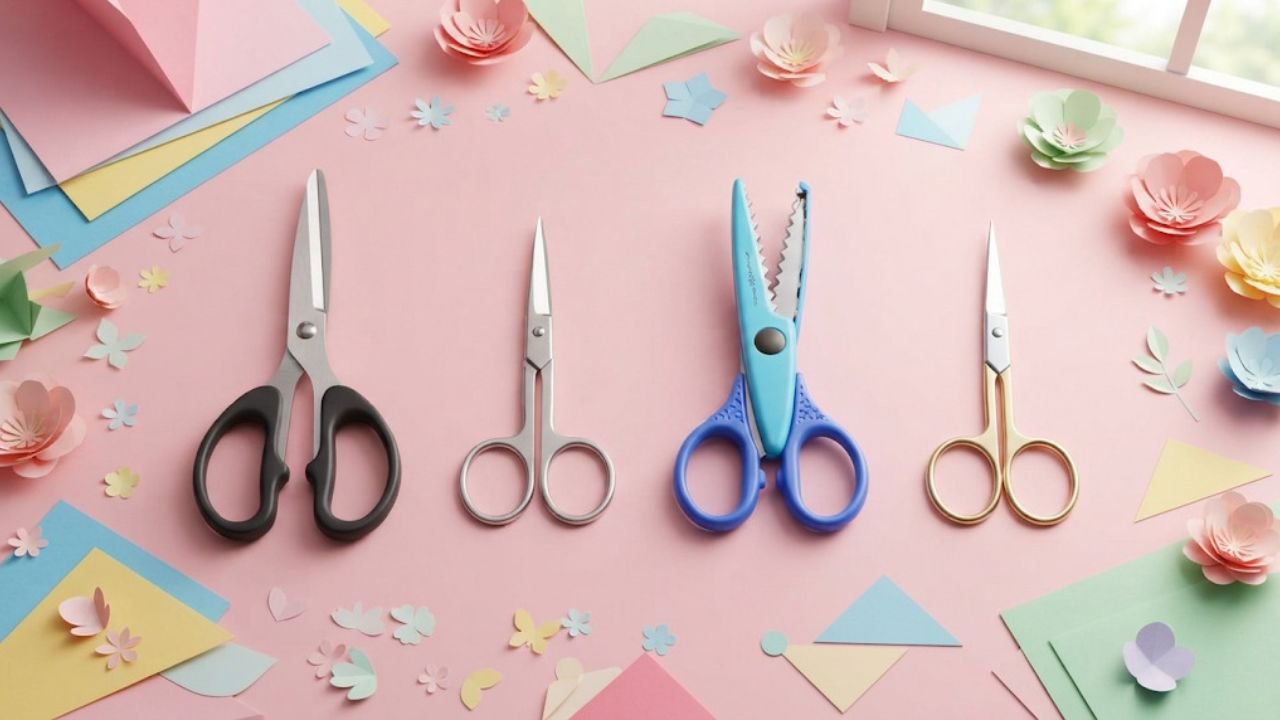
D. Small Embroidery or Detail Scissors
Small detail scissors are designed for controlled cutting in tight spaces. They can be helpful when removing tiny paper sections or refining small decorative details.
Best for:
- Fine paper details
- Small cutouts
- Detailed decorative work
- Finishing delicate shapes
Choose a pair with comfortable finger openings and blades that close smoothly.
Firbon 12-Inch Guillotine Paper Trimmer with Safety Guard
Cut paper, cardstock, and photos with clean, accurate edges.
Make precise cuts with the Firbon 12-inch paper trimmer, designed for scrapbooking, origami, and DIY projects. It features a stainless steel cutting blade, spring-loaded safety mechanism, extended side ruler, and built-in inch and centimeter measurement scales with 45°–90° angle guides. It can cut up to 10 sheets of 80gsm paper at once and handle A3, A4, A5 paper, photos, cards, and laminated materials up to 1.5mm thick.

3. Other Essential Paper Cutting Tools
Although scissors are useful for everyday projects, some tasks require different cutting tools.
A. Craft Knife or Precision Utility Knife
A craft knife is a useful tool for cutting intricate shapes, straight lines, and small sections that are difficult to reach with scissors.
It usually features a replaceable blade and a handle designed for controlled cutting.
Best for:
- Intricate paper-cutting designs
- Stencils and templates
- Cutting windows or openings in cardstock
- Straight cuts along a ruler
- Detailed paper artwork
A craft knife should always be used with a suitable cutting mat and a metal ruler when making straight cuts.
Safety tip: Craft knives have extremely sharp blades. Always cut away from your body, keep your fingers clear of the blade, and store the knife safely when not in use. Children should only use such tools with appropriate adult supervision.
B. Paper Trimmer
A paper trimmer is designed to create straight and consistent cuts. It usually has a flat measuring surface, a paper guide, and a sliding or fixed cutting blade.
Unlike ordinary scissors, a paper trimmer makes it easier to cut several sheets to the same dimensions, depending on the model's capacity.
Best for:
- Greeting card bases
- Scrapbook pages
- Photo trimming
- Paper strips
- Consistent paper squares and rectangles
If you frequently work with A4 paper or cardstock, choose a trimmer with clear measurement markings and a suitable cutting length.
A safety guard is also a useful feature.
C. Rotary Cutter
A rotary cutter uses a circular rotating blade to cut materials along a surface. It is commonly used in fabric crafts but can also be useful for certain paper-cutting applications.
Best for:
- Repeated straight cuts
- Large sheets
- Layered paper projects
- Cutting along a ruler
For paper crafting, choose a model specifically suitable for the materials you intend to cut. Always use an appropriate cutting mat and follow the manufacturer's safety instructions.
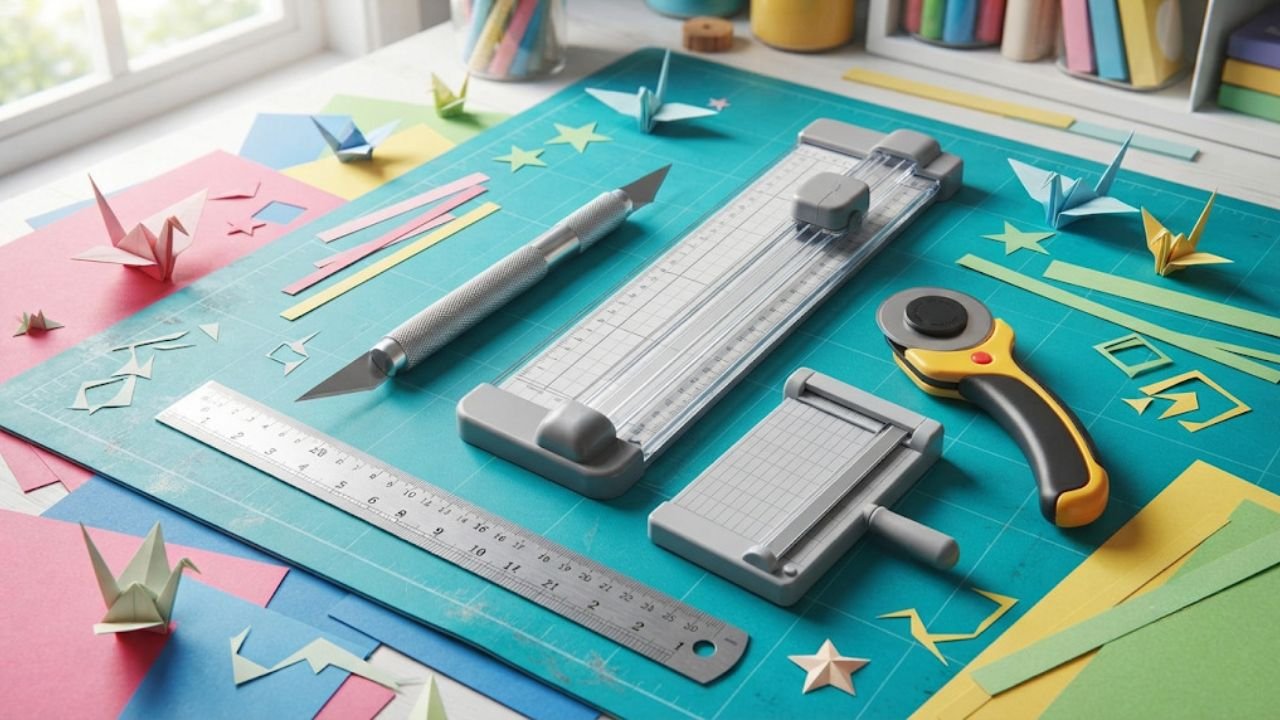
D. Paper Guillotine
A paper guillotine uses a hinged blade to cut paper in a straight line. It is especially useful when you need consistent cuts across multiple sheets.
Best for:
- Bulk paper preparation
- School and office craft projects
- Cutting card bases
- Repeated straight-edge trimming
Before purchasing one, check its cutting capacity, safety guard, base measurements, and blade-locking mechanism.

iBayam Pastel Heavy-Duty Craft Scissors Set
Enjoy smooth, comfortable cutting for everyday creative projects.
Make crafting and everyday cutting easier with this set of three 8.5-inch scissors in pastel pink, blue, and green. Featuring 2.5mm thick stainless steel blades and soft ergonomic comfort-grip handles, they are designed for both left- and right-handed users. Suitable for cutting paper, cardboard, fabric, vinyl, denim, and other materials for DIY crafts, sewing, school, and office projects.
4. Important Features to Check Before Buying Scissors
When comparing the best scissors for paper crafts, consider more than just their appearance or price.
Here are six important features to evaluate.
1. Blade Material
Stainless steel is a popular choice because it is durable and resistant to rust when properly maintained.
Some scissors also feature coated blades designed to reduce material sticking.
Choose blades that are suitable for the paper thickness you normally work with.
2. Blade Sharpness
Sharp blades produce cleaner cuts and require less effort.
Before purchasing, check product descriptions and customer feedback for comments about cutting performance and durability.
Avoid using dull scissors on delicate paper because they may crease or tear the material.
3. Handle Comfort
Comfortable handles make a noticeable difference, especially when completing large projects.
Look for:
- Smooth finger openings
- Comfortable grips
- Balanced weight
- A suitable handle size
If possible, choose scissors that fit your hand naturally.
4. Scissor Size
Different sizes are suitable for different tasks.
- Small scissors: Detailed cutting and intricate designs.
- Medium scissors: Everyday paper crafting.
- Large scissors: Larger sheets and general cutting tasks.
For most beginners, one medium-sized pair and one smaller precision pair provide a useful combination.
5. Cutting Performance
Check whether the scissors can cut smoothly from the blade tips to the base.
A good pair should not repeatedly fold, pull, or tear ordinary craft paper.
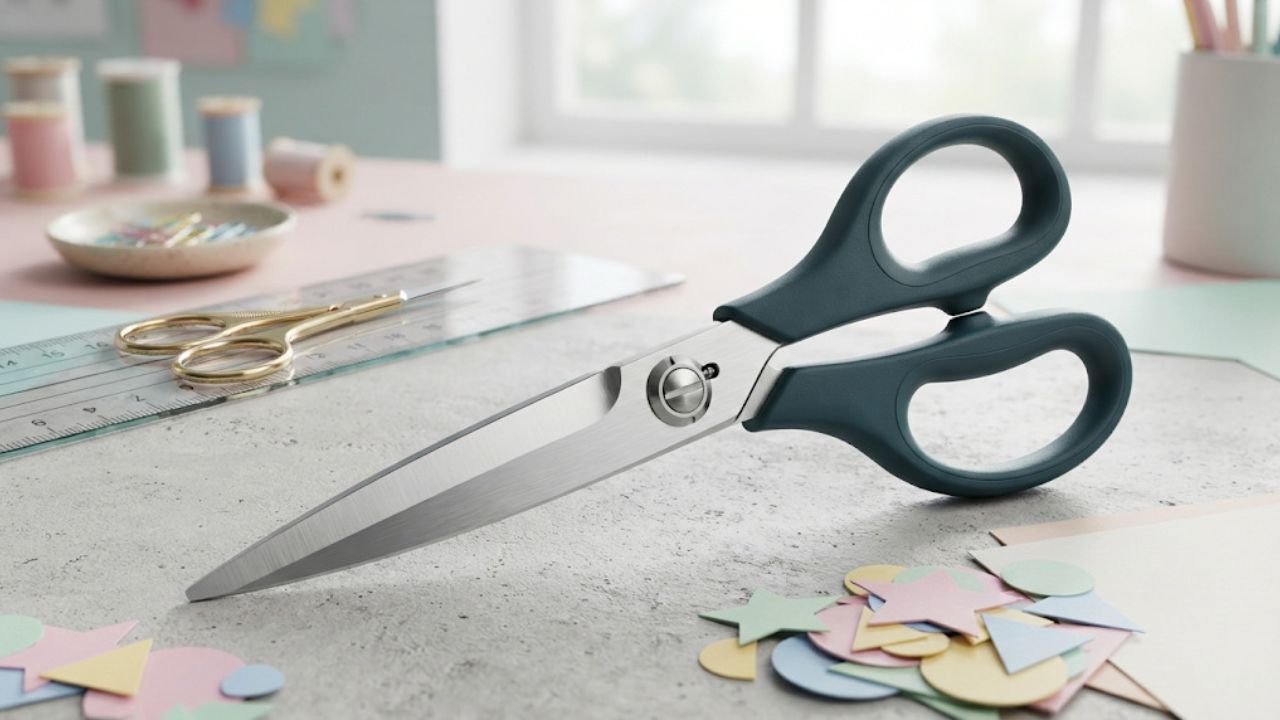
6. Safety Features
Rounded tips can be helpful for children's craft activities, while protective covers and blade locks are useful for storing sharp tools.
Always select age-appropriate tools and supervise children during cutting activities.
5. Which Cutting Tools Are Best for Different Paper Crafts?
The best cutting tool depends on the type of paper craft project you are creating. Here are some useful recommendations:
- Basic Origami Preparation: General-purpose scissors are suitable for preparing and trimming paper.
- Intricate Paper Designs: Precision scissors help you cut small shapes and detailed patterns accurately.
- Scrapbooking: Craft scissors and a paper trimmer are useful for creating decorative designs and straight edges.
- Greeting Cards: Scissors and a paper trimmer help create clean shapes and evenly sized card bases.
- Paper Flowers: Precision scissors make it easier to cut delicate petals and small decorative elements.
- Paper-Cutting Artwork: A craft knife and cutting mat are ideal for creating intricate designs and detailed patterns.
- Decorative Borders: Decorative-edge scissors help create zigzag, wavy, and scalloped paper edges.
- Large Paper Sheets: A paper trimmer or suitable rotary cutter makes cutting larger sheets easier.
- Repeated Straight Cuts: A paper guillotine helps produce consistent straight cuts across multiple sheets.
Remember that traditional origami usually focuses on folding a single sheet without cutting. However, scissors can be useful when preparing paper sizes or working on kirigami and other paper-cutting projects.
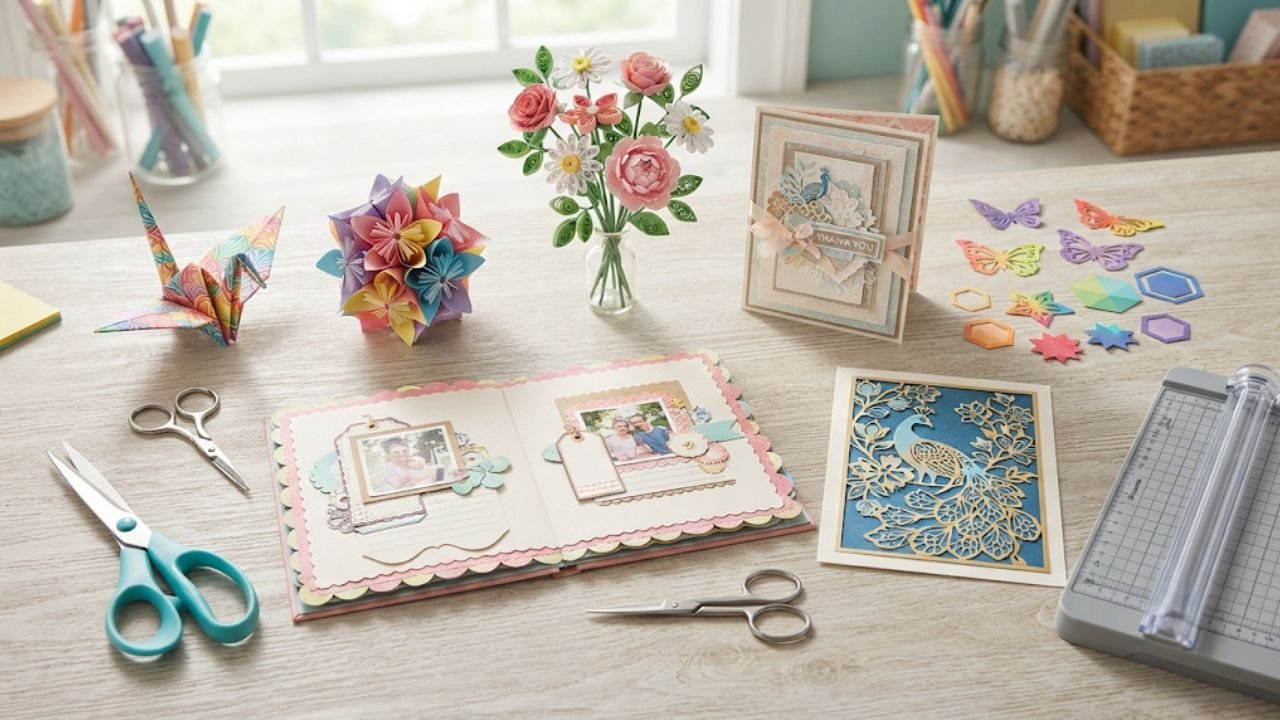
6. Essential Cutting Tools for Beginners
If you are starting a paper crafting hobby, you do not need an expensive collection of equipment.
A small, practical toolkit is enough to complete many creative projects.
Here are five supplies worth considering:
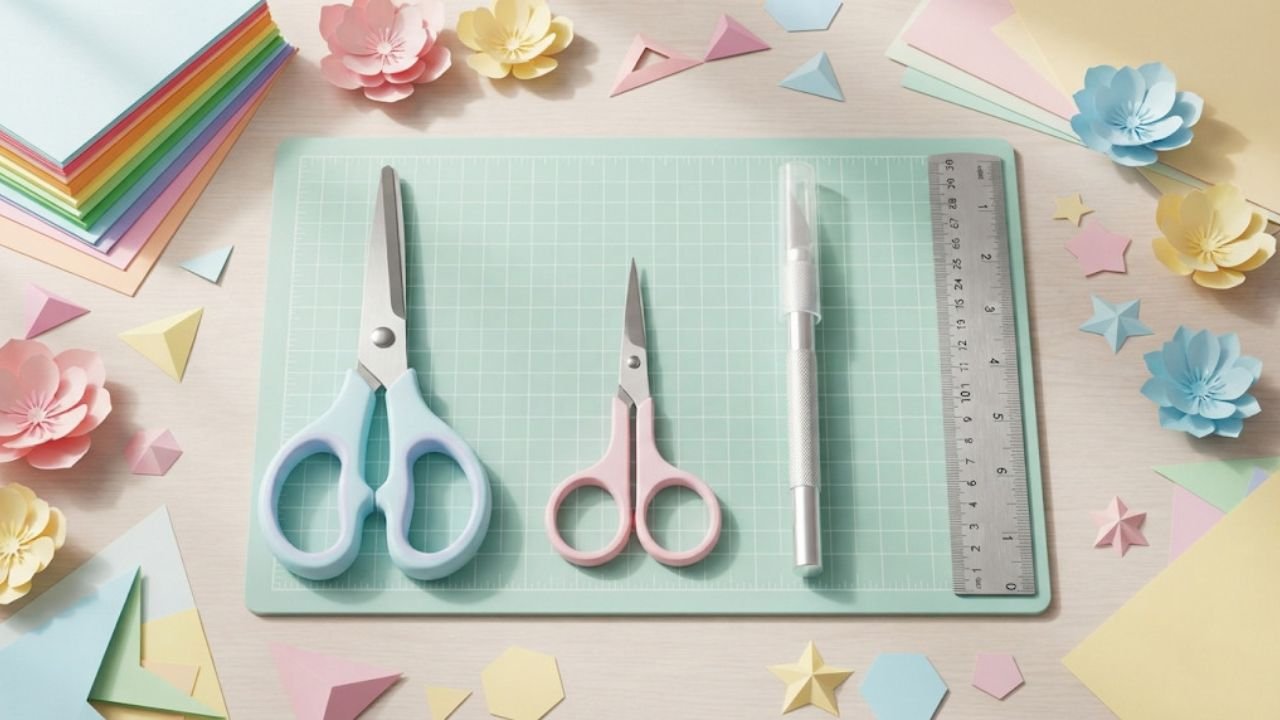
1. General-Purpose Craft Scissors
Your everyday cutting tool for paper, colored sheets, and basic decorations.
Decorative Craft Scissors and Paper Punch Set
Create fun paper designs with decorative scissors and shape punches.
Make colourful paper crafts with this 26-piece creative set, featuring 6 decorative edge scissors, 10 paper hole punches in different shapes, and 10 colourful craft papers. Create wavy, zigzag, and scalloped borders, along with decorative shapes for scrapbooking, greeting cards, journals, gift tags, and school projects. Ideal for kids, students, and DIY craft enthusiasts.

2. Precision Craft Scissors
Useful for small shapes, detailed designs, and delicate finishing work.
3. Paper Trimmer
Helpful for creating straight edges and consistent paper dimensions.
4. Craft Knife
Useful for detailed cutting and shapes that are difficult to cut with scissors.
5. Self-Healing Cutting Mat
A protective surface for craft knife work. It helps protect your table and provides a more suitable cutting area.
You can gradually add decorative scissors, specialty cutters, and other accessories as your crafting skills develop.
7. Best Tips for Getting Clean and Accurate Paper Cuts
Even high-quality tools cannot guarantee perfect results without proper technique.
Follow these simple tips to improve your cutting accuracy.
- Use sharp scissors: Check your blades regularly and replace or sharpen them when necessary.
- Mark cutting lines: Use a pencil and ruler to create accurate guidelines.
- Avoid rushing: Slow, controlled movements usually produce better results.
- Keep paper flat: Make sure your paper does not move while cutting.
- Use the correct tool: Avoid forcing ordinary scissors to cut materials they are not designed for.
- Practice on scrap paper: Test your technique before cutting expensive or decorative paper.
- Store tools properly: Keep scissors and blades clean, dry, and safely stored.
For curved shapes, turn the paper gradually instead of twisting your wrist excessively. This helps maintain better control over the cutting line.
8. How to Maintain Your Scissors and Cutting Tools
Taking care of your cutting tools helps extend their useful life and maintain consistent performance.
Here are a few easy maintenance habits:
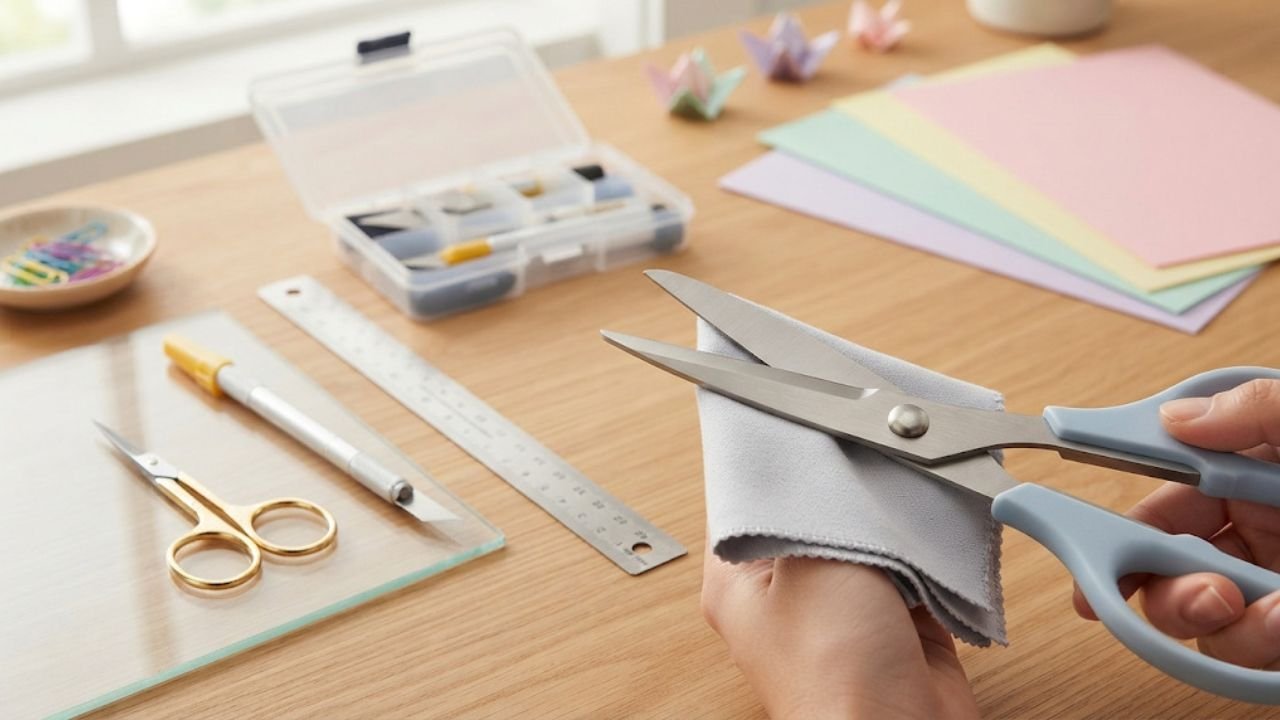
Clean the blades: Remove paper dust, adhesive residue, and other material after use. Follow the manufacturer's cleaning instructions.
Keep tools dry: Moisture can damage metal surfaces over time. Dry your tools before storing them.
Use separate scissors for different materials: Avoid using your paper scissors for fabric, thick cardboard, or sticky materials unless they are designed for those purposes.
Protect the blades: Use protective covers when available and avoid dropping scissors onto hard surfaces.
Replace damaged blades: If a craft knife blade becomes dull or damaged, replace it according to the manufacturer's instructions.
Store safely: Keep sharp tools away from young children and store them in an organized container.
A little maintenance can help your tools remain reliable for many creative projects.
9. Common Mistakes to Avoid When Buying Paper Cutting Tools
Before making a purchase, avoid these common mistakes:
- Buying scissors only because they look attractive.
- Choosing oversized scissors for detailed cutting.
- Purchasing too many specialty tools before understanding your crafting needs.
- Ignoring handle comfort and blade quality.
- Using ordinary scissors for thick materials beyond their intended capacity.
- Buying craft knives without considering cutting mats and safety.
- Forgetting to check product dimensions and cutting capacity.
A smart approach is to start with essential tools and upgrade your collection as your projects become more advanced.
10. Final Thoughts: Build Your Perfect Paper Craft Toolkit
Choosing the right scissors and cutting tools for paper crafts does not have to be complicated. The most important thing is to understand what you want to create and select tools that make those tasks easier.
For beginners, a comfortable pair of general-purpose scissors, precision scissors, and a ruler are an excellent starting point. If you regularly create greeting cards or scrapbook pages, consider adding a paper trimmer. For intricate designs, a craft knife and cutting mat can provide additional precision.
Remember, creative projects are not about owning the most expensive equipment. They are about using the right tools, developing your skills, and enjoying the process.
At Tulsi Origami, we believe that simple paper can become something extraordinary with creativity, patience, and attention to detail.
Explore our Origami Ideas & Tutorials and discover new ways to transform ordinary paper into beautiful handmade creations.
Happy crafting!
Comments
0 approved comment(s)
No comments yet. Be the first to share your thoughts!
More from Craft Supplies & Tools
Dive into more creative origami ideas, stories, and inspiration.

Best Origami Paper for Beginners: Sizes, Colors and Types Explained
Have you ever tried making an origami crane, butterfly, flower or paper swan but struggled to get clean folds? Sometimes the problem is not your folding technique. It is the paper you are using.
Read more
12 Essential Origami Tools Every Paper Craft Lover Should Have
Origami is a beautiful art of transforming simple sheets of paper into amazing creations. From delicate paper flowers and elegant cranes to decorative swans, modular designs, and intricate 3D sculptures, paper folding offers endless creative possibilities.
Read more
Origami Paper vs Cardstock: Which Paper Is Best for Your Projects?
Choosing the right paper can make a big difference in the quality of your paper crafts. Whether you enjoy folding beautiful origami animals, creating handmade decorations, making greeting cards, or building 3D paper models, the type of paper you use affects the final result.
Read more