
Origami Blog Posts ● 22 Oct 2025
The Role of Origami in Modern Architecture and Design
Origami — the ancient Japanese art of paper folding — has long been celebrated for its delicate beauty and creative potential. But in recent years, its influence has transcended art and craft, unfolding into a surprising and innovative field: modern architecture and design.

From foldable roofs to deployable emergency shelters, architects and designers are discovering how origami’s geometric precision can solve real-world challenges. It’s no longer just paper—it’s an inspiration for engineering marvels that merge aesthetic elegance with structural efficiency.
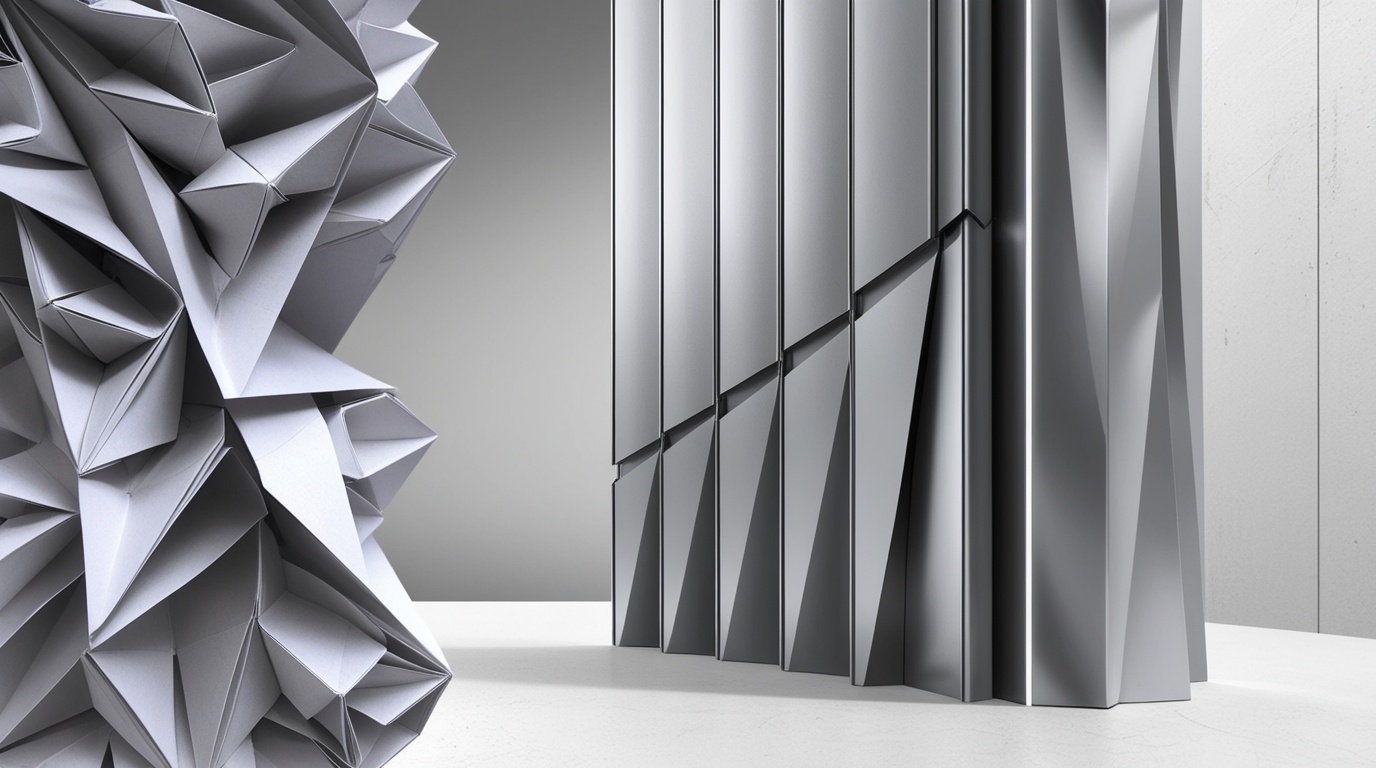
The Geometry of Folds: From Paper to Steel
At its core, origami is about transforming a flat surface into a complex three-dimensional structure through a sequence of precise folds. This concept has deeply influenced architects, who face similar challenges—turning flat materials into functional, aesthetic, and stable forms.
The principles of origami have inspired the development of foldable structures that can be compact when stored and expanded when deployed. These ideas have applications in everything from temporary pavilions to large-scale stadium roofs.
For example, the Miura Fold, a mathematical folding technique developed by Japanese astrophysicist Koryo Miura, allows surfaces to expand and collapse with ease. This same principle has been used in solar panel arrays on spacecraft, retractable roofs, and portable architectural elements.
Origami in Architecture: Where Art Meets Engineering
The connection between origami and architecture lies in the balance between form and function. Architects seek designs that are both visually appealing and structurally sound—exactly what origami offers.
Modern software and 3D modeling tools now allow designers to simulate complex folding patterns that were once only possible on paper. These computational origami models have led to innovative architectural designs such as:
- Foldable facades that change shape depending on sunlight.
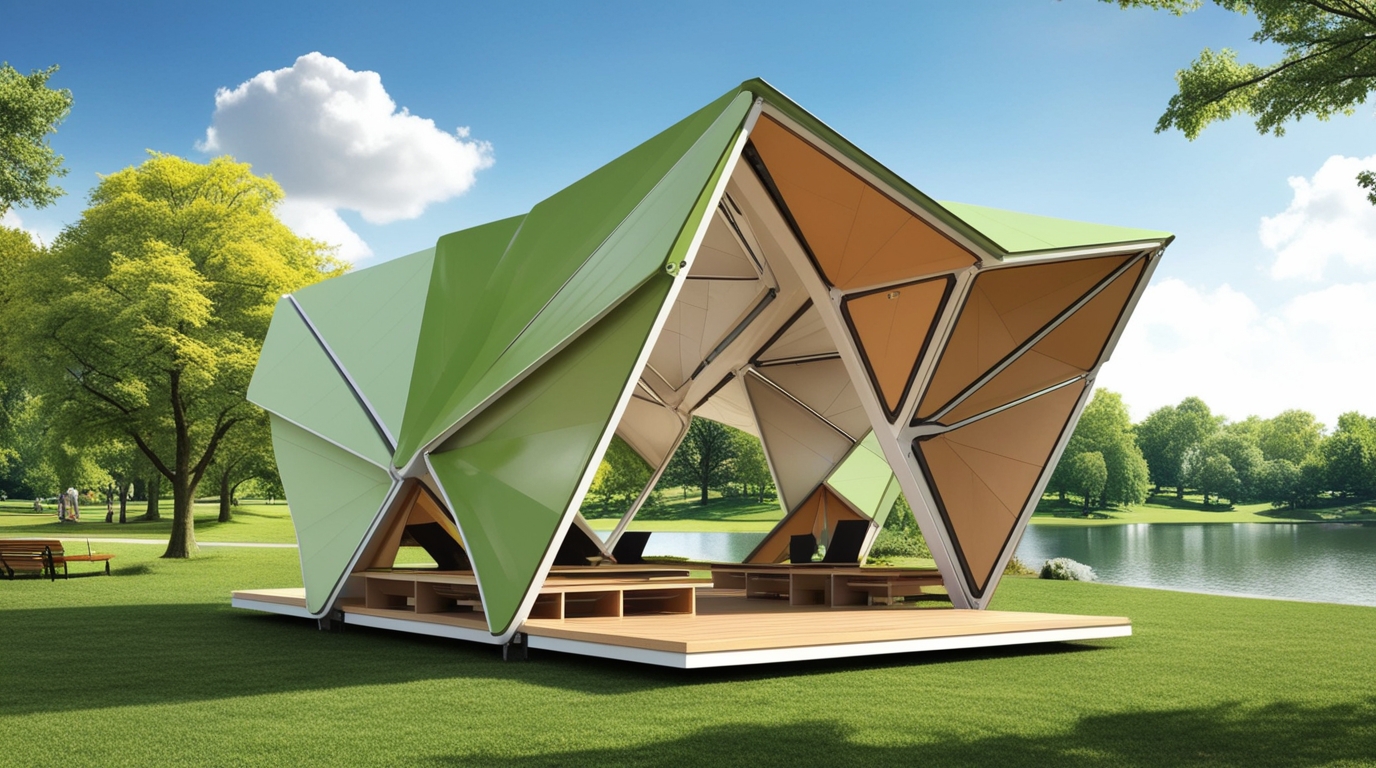
- Deployable pavilions for public installations and events.
- Dynamic shading systems that reduce energy use by mimicking natural folding patterns.
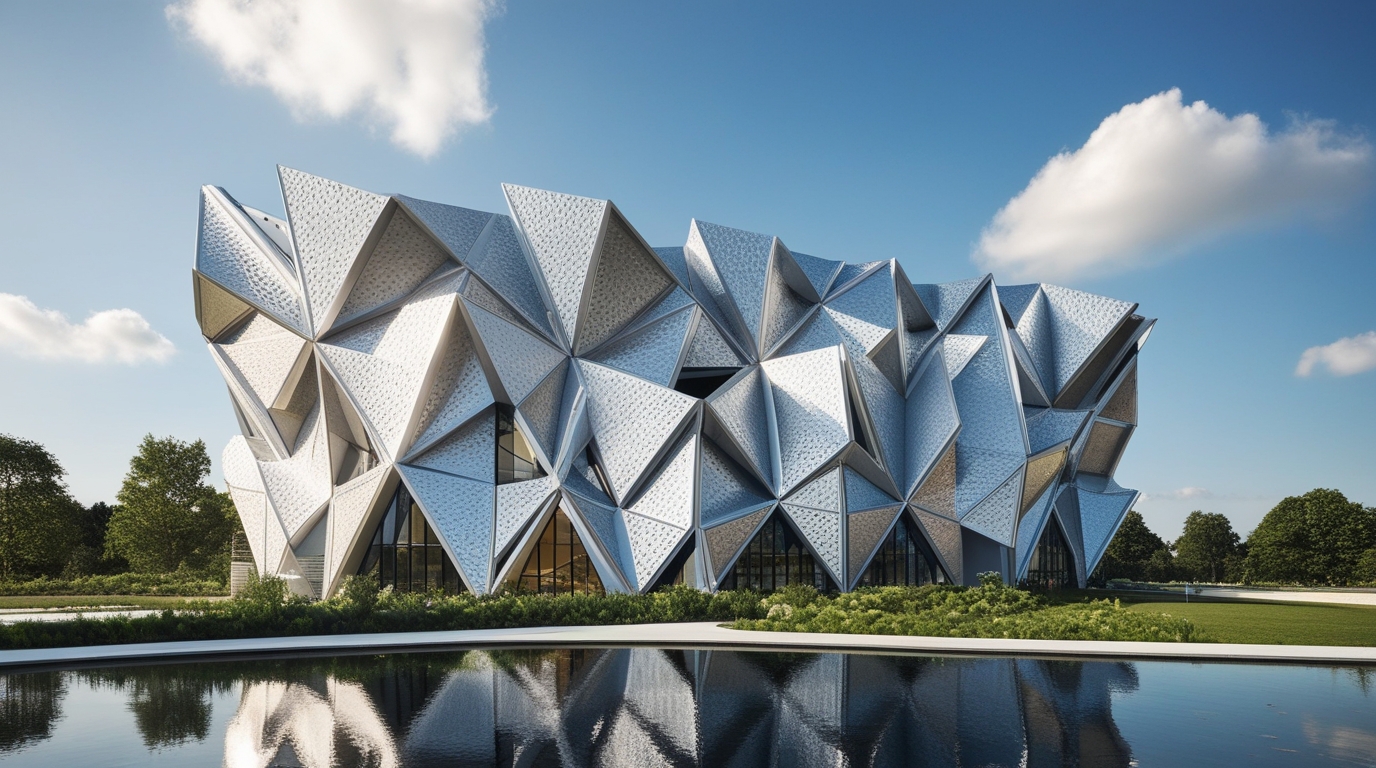
These designs not only captivate visually but also offer sustainability benefits—reducing materials, improving insulation, and optimizing natural light.
Sustainability Through Foldable Design
In today’s eco-conscious world, sustainability is a central theme in architecture. Origami-based designs excel in this area because they maximize efficiency while minimizing waste.
By using folding techniques, architects can design lightweight, compact, and efficient structures that require fewer materials. These designs are also adaptable, allowing buildings to respond dynamically to environmental conditions like sunlight, wind, or temperature.
One notable example is foldable disaster relief shelters, inspired by origami principles. These structures can be shipped flat and expanded quickly at disaster sites—offering sustainable, low-cost, and easily deployable housing solutions.
Similarly, origami-inspired solar arrays can fold out to capture sunlight efficiently and retract during storms or transport. This adaptive flexibility mirrors the resilience found in nature, making origami a perfect model for sustainable architectural innovation.
Origami in Interior and Product Design
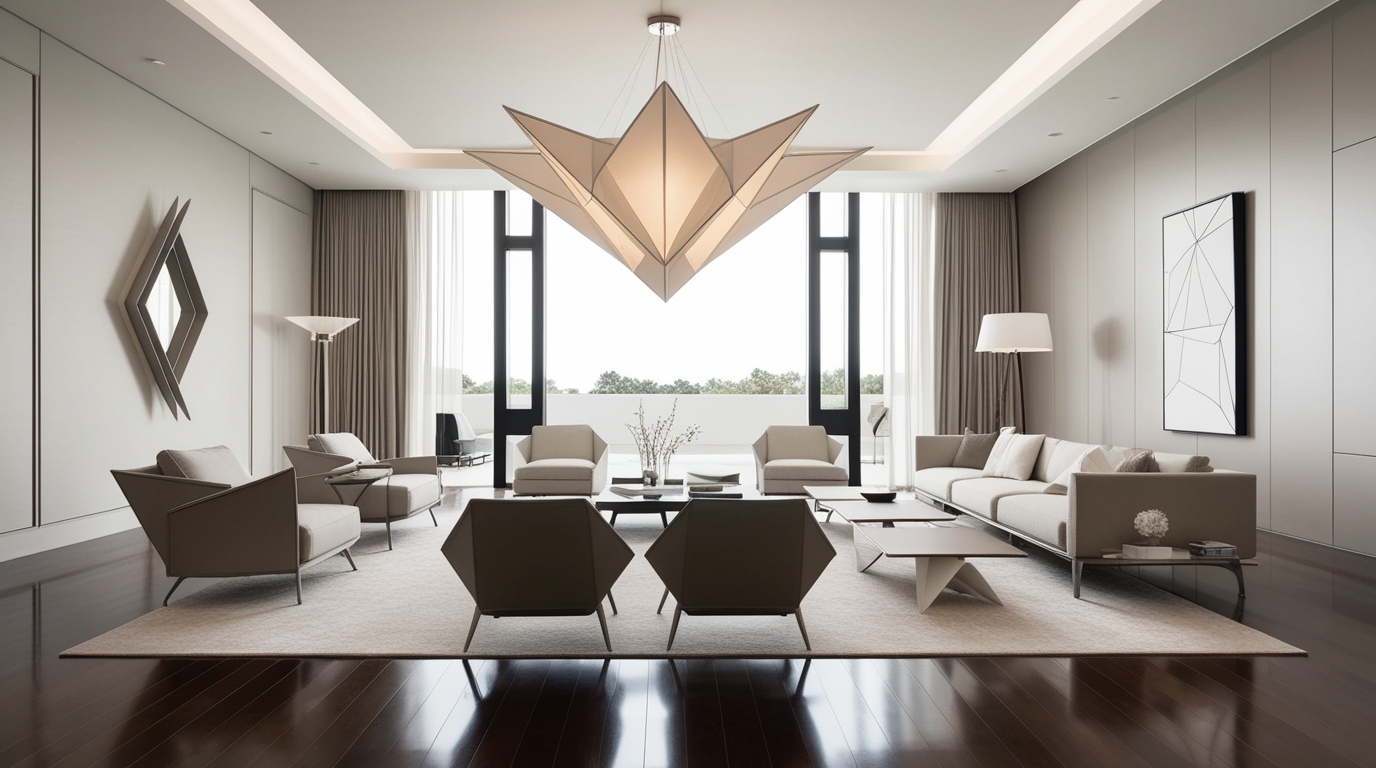
Origami’s influence extends beyond large buildings. Interior designers and furniture creators also draw inspiration from the art of folding to create pieces that combine minimalism, functionality, and beauty.
For example:
- Origami lampshades made of folded paper or fabric create dynamic light effects.
- Foldable chairs and tables inspired by origami principles are both space-saving and stylish.
- Wall panels and room dividers designed with geometric folds add texture and depth to modern interiors.
Origami-inspired design perfectly fits today’s trend toward modular, flexible living spaces—especially in urban environments where every inch counts.
Architectural Icons Inspired by Origami
Several modern buildings around the world showcase origami’s architectural influence. Some standout examples include:
- The Origami House (Barcelona, Spain): A home designed with angular, folded surfaces resembling a piece of paper mid-fold.
- The Folded Museum Pavilion (London, UK): A temporary exhibition space built entirely using foldable structures.
- The Kyoto Origami Bridge (Japan): A pedestrian bridge designed to fold flat for transport and expand when in use.
Each of these projects illustrates how origami principles can lead to innovative, flexible, and visually stunning designs.

Technology Meets Tradition
The rise of computational design and 3D modeling has made it easier to apply origami mathematics to architecture. Engineers now use parametric modeling tools to calculate fold angles, tension points, and material flexibility—turning artistic concepts into physical reality.
This blending of traditional art with modern technology represents a beautiful evolution: origami is no longer just paper craft; it’s a design language that inspires how we build our world.
Conclusion: The Future of Folded Design
Origami has unfolded far beyond its traditional roots. It’s transforming the way architects and designers think about space, movement, and adaptability.
From futuristic buildings to everyday furniture, origami-inspired design combines artistry, innovation, and sustainability in ways that reflect the needs of our modern world.
At Tulsi Origami, we celebrate this union of creativity and engineering — where every fold tells a story, and every structure begins with a single crease.
Comments
0 approved comment(s)
No comments yet. Be the first to share your thoughts!
More from Origami Blog Posts
Dive into more creative origami ideas, stories, and inspiration.
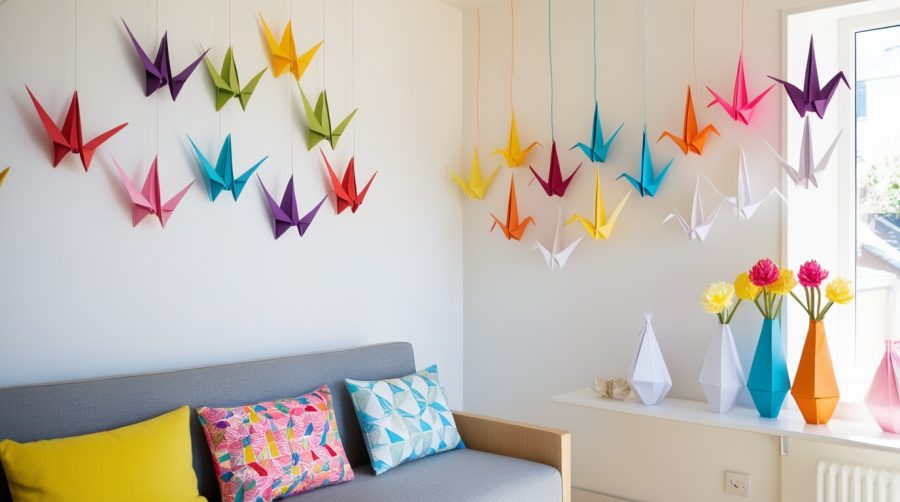
Styling Origami in Small Spaces: Big Impact, Minimal Effort
When you’re living in a small apartment or working with limited space, decorating can feel like a challenge. You want to make your home look beautiful and personal, but bulky decor or expensive furniture isn’t always practical. That’s where origami art comes in — it’s lightweight, customizable, affordable, and endlessly creative.
Read more
Origami Gifts for Parents: Thoughtful Creations They’ll Treasure
Parents are the guiding stars of our lives — always there with love, patience, and endless support. Finding a gift that truly captures your gratitude can be challenging, but origami offers a unique solution. These handcrafted paper creations symbolize care, creativity, and thoughtfulness — qualities that resonate deeply with parents.
Read more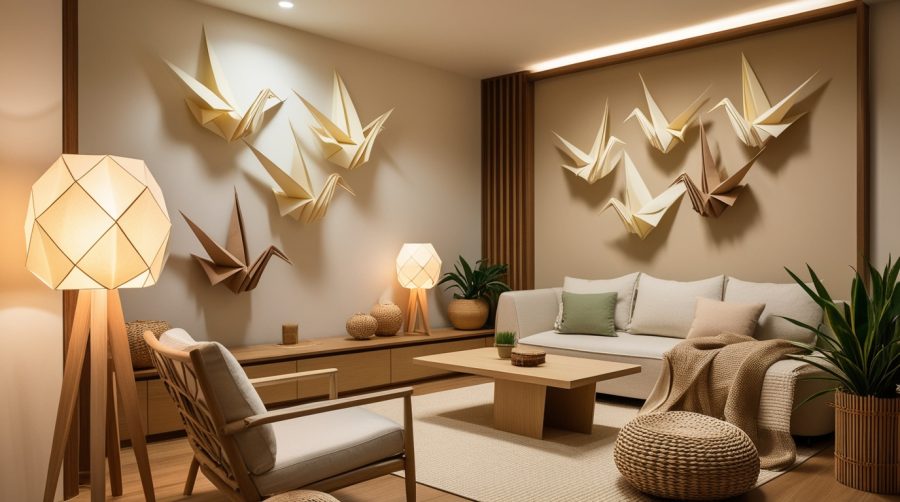
The Evolution of Origami in Modern Interior Design
Origami—the delicate Japanese art of paper folding—has fascinated people for centuries. Once considered a traditional craft reserved for cultural ceremonies and artistic expression, it has now evolved into something far more dynamic and versatile. Today, origami has found a new home in modern interior design, influencing everything from lighting and furniture to wall decor and architectural structures.
Read more